
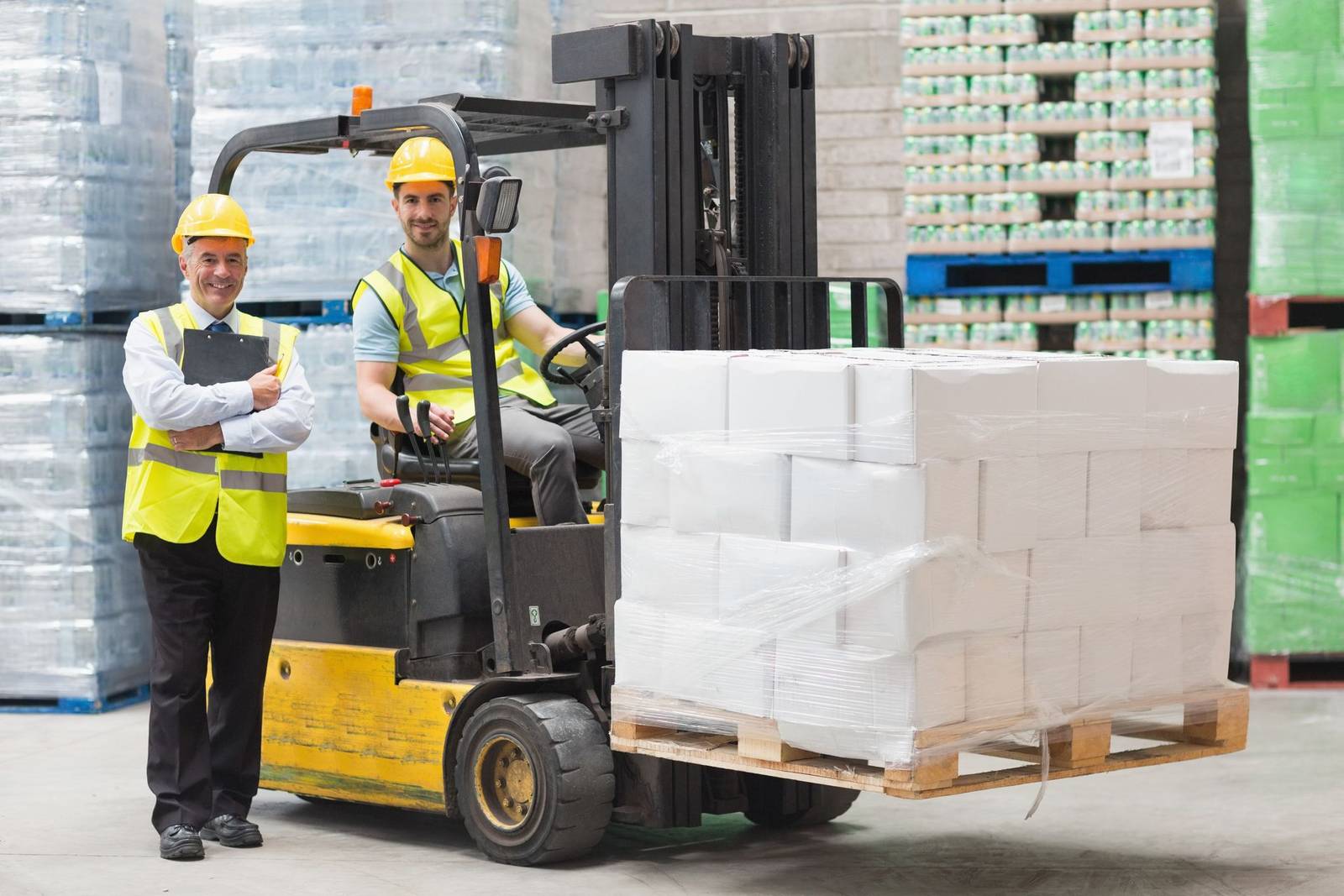
This course family is one pillar of the complete OSHA compliance training program — mapped to your operation, delivered on-site, documented the same day.
Operator Certification Is an Employer Duty
Here’s the part of powered-equipment training that surprises most companies: there is no government forklift license. OSHA 1910.178(l) puts the certification duty on the employer — you must ensure each operator is trained and evaluated, and you must certify, in writing, who did it and when. The same employer-centered logic runs through the ANSI A92 suite for mobile elevating work platforms (MEWPs): the standard tells you what training and familiarization must cover, and your company owns the record.
That structure is why a card from a weekend course at a rental yard, by itself, doesn’t make anyone legal on your dock. The training half can come from us — that’s the formal instruction and practical exercises — but the evaluation half has to happen on the equipment and in the workplace where the operator will actually work. Our courses are built to close that loop in one visit: classroom, hands-on practice, and the documented practical evaluation, all at your facility, on your machines.
Forklift: Every Class of Truck, In Your Aisles
The forklift course covers OSHA’s full training outline — truck-related topics like stability triangles, load center, and attachments; workplace-related topics like your ramps, racking, pedestrian routes, and dock edges; and the operating rules that connect them. We train and evaluate across all seven powered-industrial-truck classes: electric rider trucks, electric motorized hand trucks (walkies), electric narrow-aisle reach trucks and order pickers, internal-combustion cushion and pneumatic-tire trucks, and rough-terrain forklifts. If your fleet mixes a sit-down counterbalance with a reach truck and a telehandler, each operator gets evaluated on each family they’ll run — a class 1 evaluation doesn’t cover a class 7 machine.
Training happens where the trucks live. The instructor walks your aisles before the class and folds what he finds into the workplace-topics module — the blind corner by receiving, the ramp to the mezzanine, the charging area, the intersection where a near-miss already happened. That’s not a nicety; site-specific content is literally required by 1910.178(l)(3), and it’s the difference between an operator who passed a quiz and one who knows why your rack legs are bent. Want your supervisors to run it in-house? See forklift train the trainer.
The Three-Year Clock — and the Five Triggers That Reset It
OSHA requires an evaluation of each operator’s performance at least once every three years. That re-evaluation is a real, observed drive — not a signature — and it’s the piece most warehouses let lapse. Between cycles, five triggers require refresher training immediately: the operator is observed driving unsafely; they’re involved in an accident or near-miss; an evaluation shows they need it; they’re assigned a different type of truck; or the workplace changes in a way that affects safe operation (new racking layout, new dock, new pedestrian flow). Put those triggers in your supervisors’ vocabulary — “he clipped a rack upright” isn’t just a maintenance ticket, it’s a mandatory retraining event.
Aerial & Scissor Lifts: The A92 Rewrite Changed the Job
If your MEWP training predates the ANSI A92.22 / A92.24 overhaul, it’s built on vocabulary that no longer exists. The standards reorganized machines into Group A (platform stays inside the tipping line — most scissor lifts) and Group B (platform can extend beyond it — boom lifts), and Types 1 through 3 by how they travel. Operator training is machine-class-specific, and on top of it sits familiarization — a documented walk-through of the specific model’s controls, features, and limits every time an operator takes an unfamiliar machine. Trained on a Genie doesn’t mean familiarized on the JLG that showed up on the rental truck Friday.
Our MEWP course trains and evaluates operators on the groups and types you run — boom and scissor — and teaches your leads how to run and document familiarization in-house so the rental-yard swap doesn’t create a paperwork gap. To qualify your own trainers, see aerial lift train the trainer.
Occupants and Supervisors: The Two Modules Everyone Skips
A92.22 doesn’t stop at the operator. Anyone who rides the platform — an occupant — needs basic instruction: fall protection use, what to do if the operator can’t function, and what they can and can’t touch. And every employer with MEWPs on site needs trained supervisors who can select the right machine for the task, spot misuse, and know the rules well enough to enforce them. Both modules are short, both are required, and both are almost always missing when we do a first visit. We fold them into the same training day so the whole chain — operator, occupant, supervisor — is covered and documented at once.
Why Training on Your Equipment Beats a Generic Course
- The evaluation actually counts. OSHA’s practical evaluation must reflect the workplace. Your dock plates, your grades, your loads — not an empty parking lot.
- Attachments get covered. Slip a clamp, rotator, or work platform on a truck and the capacity math changes. We train on the attachments your operators actually pick up.
- No production shutdown. Crews rotate through hands-on sessions a few at a time while the shift keeps moving; nights and weekends are on the table for 24/7 plants.
- One record set. Certificates, wallet cards, written tests, and evaluation forms come back as one package, ready for the file the next time a compliance officer or auditor asks.
The Practical Evaluation: What We Actually Watch
The written test proves someone can recognize a stability triangle on paper. The practical evaluation proves they won’t put a truck on its side, and it’s the half of certification that separates a real program from a paperwork one. On forklifts, the evaluator scores the whole cycle: pre-shift inspection done by hand and not by memory, mount and dismount with three points of contact, travel with the load low and tilted back, speed matched to sight lines, horn discipline at corners, square approaches to the rack, forks level before entry, and a controlled set with no rack contact. We fail people on ugly habits, not just on incidents-in-miniature — the operator who rides with forks at chest height because “it’s faster” is the one who eventually harvests a sprinkler head or a coworker.
On MEWPs the drive test changes shape: workzone setup and ground assessment first — slopes, penetrations, overhead lines — then harness and lanyard anchored to the manufacturer’s point in a boom, controls run smoothly at height, function tests before elevation, and the discipline of never climbing the rails or belting off to adjacent steel. Every evaluation is scored on a written form that names the machine, the tasks, the evaluator, and the result, because “he did fine” is not a document.
Operators Are Half the System — Pedestrians Are the Other Half
Most forklift fatalities aren’t operators; they’re people on foot. A serious operator program spills over into the rest of the building, and our training day is built to take advantage of that: while operators rotate through evaluations, we’ll run short pedestrian-awareness talks for the departments that share the floor — the three-foot rule around a moving truck, never walking under raised forks, eye contact before crossing an aisle, and why the operator physically cannot see them in the rear swing. Pair that with the workplace-topics module (your aisle markings, mirrors, dock chains, and speed zones) and the certification stops being a card in a wallet and starts being a traffic system. If the floor plan itself is the problem, we’ll say so in the debrief — more than once the cheapest fix we’ve recommended was a convex mirror and a repainted crossing, not more training.
Certification Cycles at a Glance
| Machine | Governing standard | Certification / cycle | Retraining triggers |
|---|---|---|---|
| Forklift (all 7 classes) | OSHA 1910.178(l) | Employer certification; re-evaluation every 3 years | Unsafe operation, accident or near-miss, failed evaluation, new truck type, workplace change |
| Boom lift (Group B) | ANSI A92.22/.24; OSHA 1926.453 | Operator training + per-model familiarization | New model, new group/type, observed misuse, incident |
| Scissor lift (Group A) | ANSI A92.22/.24; OSHA scaffold/PIT interpretations | Operator training + per-model familiarization | Same as boom, plus site changes affecting stability |
| Occupants & supervisors | ANSI A92.22 | Documented instruction before platform use / oversight | Standard or fleet changes |
Running Cranes Too? That’s Our Sister Company
Operator certification training for mobile and tower cranes, NCCCO exam prep, rigger and signal-person qualification, and crane operator evaluations live with our crane-dedicated team at 3P Safety Crane & Rigging Training — same founder, same on-site model, purpose-built for the CCO world. If your project needs forklift certs and a qualified rigger course in the same week, we coordinate the two so you mobilize one company, not two vendors.
What the Documentation Package Includes
Every operator course closes with the records that make the training defensible: a signed roster, each operator’s written test, the practical evaluation form naming the machine and the evaluator, wallet cards, and the employer certification statement with trainer credentials attached. Keep them three years minimum for forklifts — though we recommend keeping them for the life of employment, because the first document request after any incident is “show me his training file,” and the second is “show me the evaluation.” For high-turnover operations we also set a standing new-hire cadence — a short monthly or quarterly evaluation visit — so nobody drives uncertified while waiting on the next big class.
Your trainer is a working equipment professional — 3P Safety’s founder has run heavy iron since 2005 and holds NCCCO operator, inspector, and lift-director credentials alongside his OSHA 500. The person teaching load center has felt a light rear axle, and it shows in the questions he asks your operators.
Frequently Asked Questions
Is a forklift certification from another employer still valid here?
Not by itself. The training topics may carry over, but 1910.178(l) requires your company to evaluate the operator in your workplace on your equipment and certify the result. When an experienced operator joins, the efficient path is a documented evaluation plus workplace-specific instruction — which is exactly the short-form visit we quote for new-hire batches.
How long does operator certification take?
A typical forklift class runs a half day to a full day depending on head count, truck classes, and how much hands-on rotation your fleet needs; MEWP courses are similar. Mixed days — forklift in the morning, boom and scissor in the afternoon — are common and usually the most efficient way to buy it.
Do operators get a card?
Yes — wallet cards for the machine families they were evaluated on, plus the full employer-side records package. Just remember the card is evidence of the system, not the system itself: the certification OSHA asks about is the employer’s written record.
Do aerial lift operators have to be trained per machine model?
Training is per group and type; familiarization is per model. An operator trained on Group B booms doesn’t need a new course for a different boom brand, but they do need a documented familiarization on that model’s controls and features before they run it. We teach your leads to handle familiarization internally so rentals don’t strand you.
Can you train and evaluate operators on night shift?
Yes. On-site means on your schedule — we regularly run second- and third-shift sessions so a 24/7 operation never has an uncertified shift, and split crews across two shorter sessions where coverage is tight.
What about telehandlers and rough-terrain forklifts on construction sites?
Covered — they’re Class 7 powered industrial trucks, and we evaluate them on the terrain they actually work: grades, spoil, mud, and suspended-load attachments included. If the machine picks with a hook more than it forks, that conversation belongs with our crane and rigging team, and we’ll tell you honestly which side of the line your operation sits on.
Get an operator-training quote and tell us the fleet — classes, head count, shifts — and we’ll scope it same-day. Related tracks: OSHA 10 & 30 outreach, competent-person courses, workplace compliance, and specialty & high-hazard — or browse the full catalog and our coverage map.