
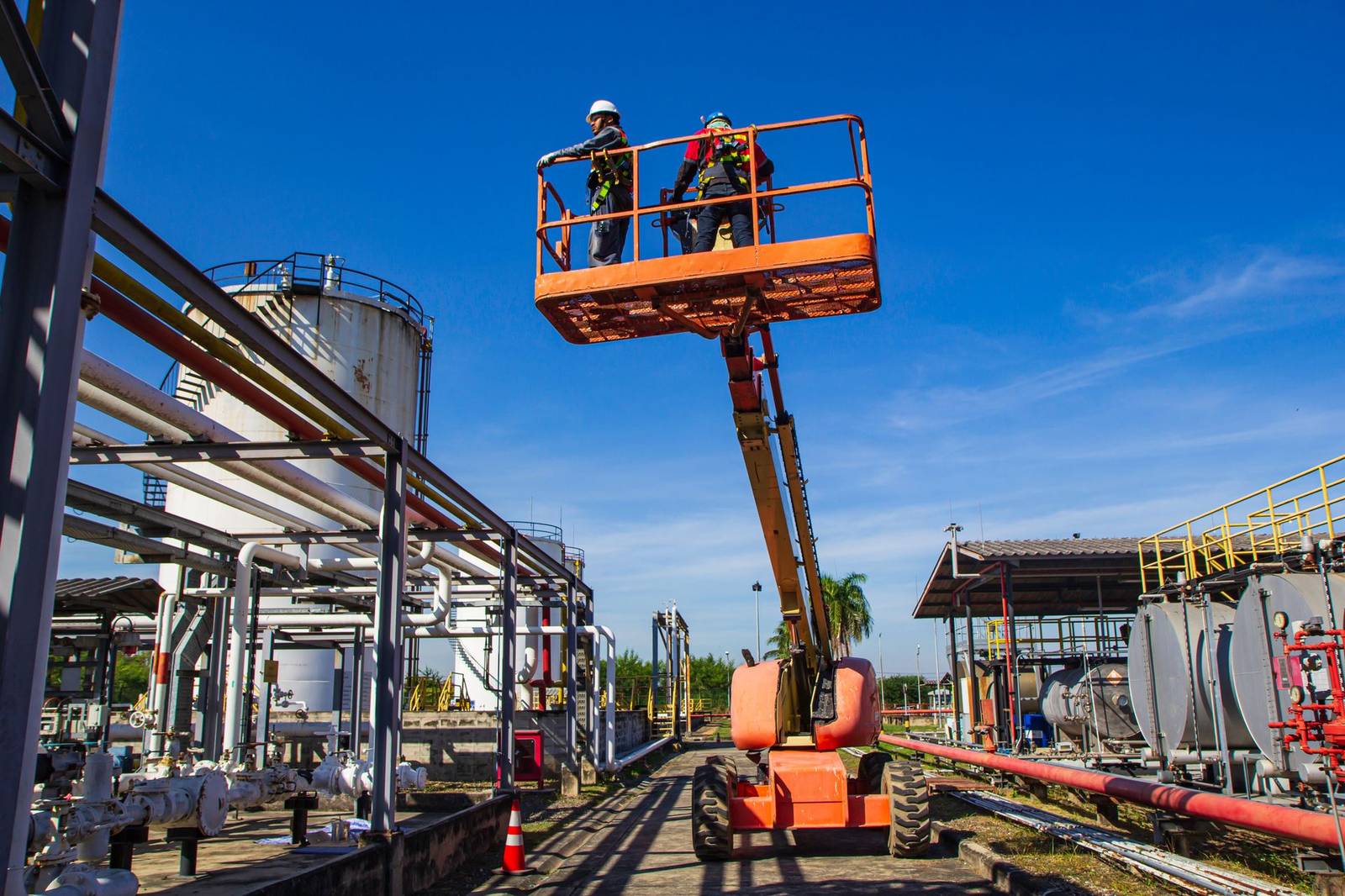
The industry still says “aerial lift,” but the rulebook moved: since the ANSI/SAIA A92 suite was rewritten, boom lifts and scissor lifts are MEWPs — mobile elevating work platforms — and the training expectations got broader and much more specific. Operators must be trained and familiarized on each model they run. Occupants riding the platform need training of their own. Even the supervisors who assign the work now have a defined training requirement. Most employers have heard none of this, which is precisely what an incident attorney counts on.
3P Safety Training brings the whole package to your jobsite or facility: classroom instruction, hands-on operation and evaluation on your machines, occupant and supervisor modules, and documentation mapped to both OSHA and the A92 standards. Your crew gets qualified on the lifts they actually use — booms, scissors, or both — in one visit. Want your own people to run it after we leave? Our aerial lift train the trainer course qualifies them to train and evaluate operators in-house.
The Rules: OSHA + ANSI, and Where Scissor Lifts Actually Live
Three overlapping authorities cover powered access, and knowing which applies is itself a compliance skill:
- 29 CFR 1926.453 — Aerial lifts (construction). Covers boom-supported platforms (articulating and telescopic booms, bucket trucks) and requires that only trained, authorized persons operate them.
- Scissor lifts are not “aerial lifts” under OSHA. The agency regulates them as mobile scaffolds under 1926.452(w) and the scaffold training rule 1926.454 — a distinction that changes fall-protection logic (guardrails are primary on a scissor) and one we teach explicitly because half the internet gets it wrong.
- ANSI/SAIA A92.22 & A92.24 — the national consensus standards for safe use and training of MEWPs. OSHA enforces them in practice through the General Duty Clause and references; owners and rental houses increasingly require A92-compliant training outright. This is where operator familiarization, occupant training, supervisor training, and site risk assessment come from.
MEWP Classification: Groups and Types
Under A92, machines classify by where the platform can go (Group) and how the machine travels (Type). Training must match the classification the operator will use:
| Classification | What It Means | Common Examples |
|---|---|---|
| Group A | Platform stays within the tipping lines — moves vertically | Scissor lifts, vertical mast lifts |
| Group B | Platform can extend beyond the machine’s footprint | Articulating (knuckle) booms, telescopic (stick) booms |
| Type 1 | Travels only in the stowed position | Push-around vertical lifts |
| Type 2 | Travel elevated, controlled from the chassis | Certain vehicle-mounted platforms |
| Type 3 | Travel elevated, controlled from the platform | Most self-propelled booms and scissors on your site |
A qualified 3a/3b operator card means something specific: an operator trained on a Group A Type 3 scissor is not thereby qualified on a 135-foot Group B telescopic boom. We train and evaluate by group and type, and we familiarize on each model, which is what the standard actually demands.
What the Course Covers
- Regulations and standards: OSHA 1926.453 / 1926.452(w) / 1910.67 for general industry, and the ANSI A92.22/A92.24 duties of dealers, owners, users, operators, occupants, and supervisors
- Pre-start inspection — the walkaround and function tests the manufacturer’s manual requires, plus workplace inspection for the hazards that kill lift operators: drop-offs and holes, slopes, debris, overhead obstructions, and power lines with the clearances treated as law
- Stability physics — why booms tip and scissors blow over: capacity and platform loading, wind ratings and the indoor-only machine that grew wheels, ground pressure, outriggers, and travel-elevated discipline
- Fall protection done right by machine class — personal fall arrest or restraint in booms (the catapult effect is real), guardrail-primary logic on scissors, anchor points, and what your site policy should say
- Safe operation: smooth control inputs, maneuvering near structures, work positioning, occupant management, and the ground-rescue plan for a platform stuck at height
- Emergency lowering controls — hands-on, per model, because the ground crew finding that valve for the first time during an emergency is a plan written by hope
- Hands-on evaluation — every operator drives the machine through a practical exercise and is individually evaluated and documented
- Occupant training for platform riders, and the supervisor module A92.24 requires for those who direct or monitor MEWP work
Format, Duration, and Delivery
Instructor-led, on-site, on your machines — typically one day for a crew covering one or both groups: classroom and written test in the morning, hands-on familiarization and individual evaluations in the afternoon. The occupant and supervisor modules run compactly alongside. Telehandler in the same yard? That is a different qualification with its own standard, handled by our sister company — telehandler operator training at 3P Safety Heavy Equipment Training — and we can coordinate the visits. Delivered anywhere in the U.S., scheduled around your project.
What Your Crew Walks Away With
- Aerial and scissor lift operator cards — operator certificates and wallet cards identifying the MEWP groups and types each operator is qualified on
- Documented model-specific familiarization records — the piece rental-fleet employers are most often missing
- Written tests and scored hands-on evaluations for your files, plus occupant and supervisor training records
- Retraining and re-familiarization triggers your program can actually track: new model, observed unsafe operation, incident, or changed site conditions
How the On-Site Visit Runs
- Scoping call. Which machines (booms, scissors, or both — makes and models help), how many operators, whether occupants and supervisors need their modules, and the site. Rental fleet? Tell us what is on the yard that week; the familiarization training adapts.
- Site prep. You cone off a practical area with the machines charged/fueled and the operator manuals in the platforms where they belong (their absence is itself a teachable moment). A breakroom or trailer covers the classroom block.
- Training day. Classroom and written test in the morning — regulations, classifications, stability, fall protection by machine class. Afternoon on the iron: pre-start inspections done for real, function tests, hands-on maneuvers, emergency-lowering drills from the ground, and individual evaluations per operator per group.
- Occupant and supervisor modules run in compact blocks alongside — typically the occupants join for the relevant classroom hour, and supervisors take their module while operators run evaluations.
- Documentation before we leave. Cards listing groups and types per operator, familiarization records, tests, evaluation sheets, and the occupant/supervisor rosters — the full A92 paper trail, same-day.
Industries and Crews We Train
- Construction trades — electrical, mechanical, framing, glazing, and finish crews living in booms and scissors from rough-in to punch list
- Warehousing and facilities — order-picker-adjacent scissor work, lighting and sprinkler maintenance, and the racking-aisle traffic plan that goes with it
- Manufacturing plants — overhead work around process equipment, where the drop-off and crush hazards are permanent features, not phases
- Painting, signage, and building-services contractors — high-cycle boom users whose exposure hours dwarf everyone else’s
- Municipal, campus, and event crews — mixed fleets, many occasional operators, and the model-to-model familiarization discipline that keeps a motor pool compliant
What Drives the Quote
Operator count, machine groups covered (A, B, or both — each adds evaluation time), whether occupant and supervisor modules are in scope, and location. One day covers most crews; large fleets or multi-shift operations get a second evaluator or a second day. The quote comes back as a single number for the whole visit. Request a quote or call (252) 274-0583.
Why Train With 3P Safety
3P Safety is founder-led by Patrick Salazar — OSHA 500 authorized construction outreach trainer and a working NCCCO-certified mobile and tower crane operator, certified crane inspector, and lift director, in the field since 2005. Working at height under load is the family business: the same outfit that trains crane operators nationwide teaches your MEWP crew, with the same documentation discipline we bring to federal work. Most clients bundle this course with fall protection (the harness half of boom work), forklift operator training, or confined space entry for a single on-site qualification day that covers the whole crew.
The Failures That Show Up in Incident Reports
MEWP incidents cluster around a short list of causes, and every one of them is a training artifact. Tip-overs: driving elevated across a grade or into a pothole the workplace inspection should have flagged, or trusting an indoor-rated machine against outdoor wind. Ejections: boom operators un-clipped or clipped to the handrail instead of the anchor when the platform whips — the catapult effect turns a curb strike at ground level into a launch at sixty feet.
Electrocutions: booms and power lines, the oldest story in powered access, prevented by clearances that are taught as absolute numbers rather than judgment calls. Crushing: operators pinned between the platform rail and overhead steel while looking at the work instead of the travel path — the reason newer machines carry secondary guarding and the reason we drill control orientation until it is boring. The stuck platform: not an injury by itself, until an untrained ground crew improvises with the emergency controls. Every one of these has a slot in our course outline; that is not an accident.
The Rescue Question Every MEWP Site Should Answer
A worker in a harness in a basket sixty feet up with a failed machine or a medical event is a rescue problem with a clock on it — and “call 911” is a plan for a recovery, not a rescue. The class makes crews answer it concretely: who on the ground knows the auxiliary lowering controls on this model, where those controls are, and how the emergency descent runs when the primary power is dead. Ground-control familiarization is part of every operator course we run, because the person who saves a stranded operator is almost always standing at the base of the machine.
Frequently Asked Questions
Do occupants who never touch the controls really need training?
Yes — A92.22 is explicit. Anyone riding the platform needs instruction on fall protection use, load limits, and what to do if the operator becomes incapacitated, including how the ground controls summon help. It’s a short module, and we fold it into the operator class so the whole basket is covered in one visit.
Does a telehandler with a work platform count as a MEWP?
A telehandler running a personnel platform lives under its own rules — operator training and evaluation for the machine plus the platform provisions — and it’s one of the most commonly botched setups in the field. Tell us what attachments your fleet actually runs and we’ll scope the class so the paperwork matches the iron; the telehandler conversation often belongs with our heavy-equipment telehandler operator training.
Do scissor lift operators need “aerial lift” training?
They need training, but under the right rule: OSHA treats scissor lifts as mobile scaffolds (1926.452(w)/1926.454), not aerial lifts, while ANSI A92 covers them as Group A MEWPs. Our course trains and evaluates scissor operators under the correct framework — an “aerial lift card” that never mentions the scaffold standard is a tell that the trainer never read it.
Do occupants in the platform need training too?
Yes. Under ANSI A92.24, anyone riding the platform who is not the operator still needs training on fall protection use, load limits, and what to do if the operator becomes incapacitated. It is a short module, and we run it alongside operator training so the whole basket is covered.
How long is MEWP operator certification good for?
The standards do not set a fixed federal expiration; retraining is triggered by observed unsafe operation, an incident, a new machine group/type, or changed conditions. Familiarization is required for every new model an operator runs. As a program matter, most employers refresh on a three-year cycle to mirror their forklift program — a sensible convention we support.
Is fall protection required in a scissor lift?
The guardrail system is the primary fall protection on a scissor lift — occupants must keep both feet on the platform floor and never climb the rails. Personal fall arrest is generally not required by OSHA in a scissor with intact guardrails (site and manufacturer policies can add it), while in boom lifts a personal fall protection system attached to the manufacturer’s anchor is required. We teach the machine-by-machine logic so your policy is defensible in both directions.
Can you qualify operators on booms and scissors in the same visit?
Yes — that is the normal package. Classroom covers both groups, then operators complete hands-on familiarization and evaluation on each machine class they will use. Cards list the groups and types individually.
We rent lifts, and every jobsite has a different model. How does familiarization work?
Training covers the group and type; familiarization is the shorter, documented model-specific step — controls, devices, manual location — required each time an operator takes on an unfamiliar model. We train your operators to run and document their own familiarizations, which is exactly how a rental-heavy fleet stays compliant without calling a trainer every Monday.