
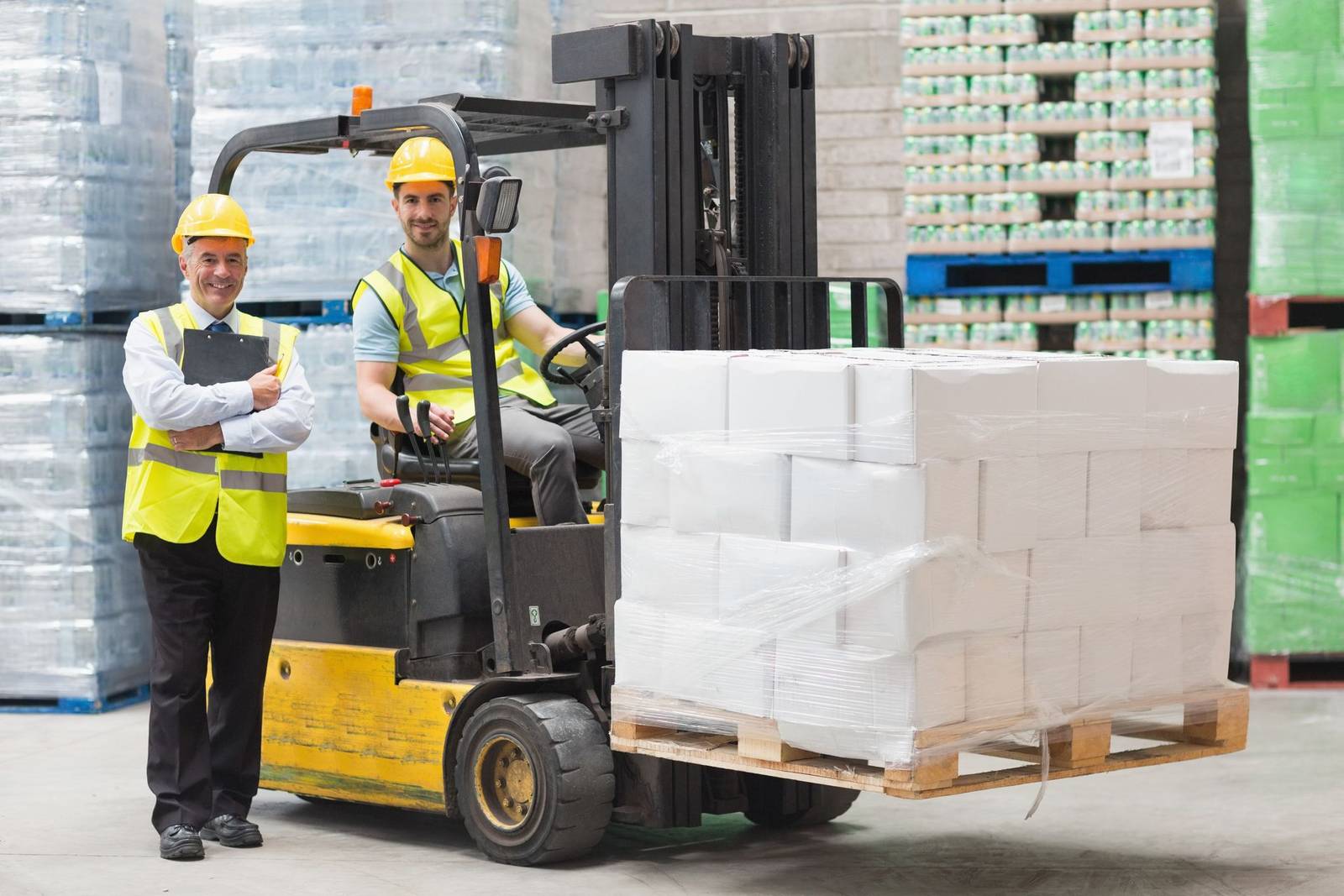
3P Safety Training runs forklift certification training the way the standard actually reads: formal instruction, practical training, and a scored evaluation of each operator on the equipment they will really drive — not a projector day with a certificate printer at the end.
Call (252) 274-0583 or find your market. Scheduling builds around your shifts, including nights and weekends where production demands it.
What OSHA 1910.178 Actually Requires
Forklift training is one of the few places OSHA spells the requirement out in full. Under 1910.178(l), every powered industrial truck operator must complete three things before driving unsupervised: formal instruction (the classroom half — lecture, written material, testing), practical training (demonstrations and hands-on exercises on the truck), and an evaluation of the operator’s actual performance in your workplace.
Then the part companies miss: the employer certifies the training — a record naming the operator, the training date, the evaluation date, and the identity of the person who did the evaluating. No third party issues a “forklift license,” because no such license exists. The certification obligation, and the citation when it is missing, both land on the employer.
The clock keeps running after day one. An evaluation of each operator is required at least once every three years, and refresher training triggers on specific events: an accident or near miss, an observed unsafe operation, an assignment to a different truck type, or a change in workplace conditions that affects safe operation.
That is the whole legal skeleton — and it is exactly the sequence our on-site course walks through, with the records to prove each step happened.
The Truck Classes We Train
Certification is truck-specific — an operator trained on a sit-down counterbalance truck is not certified for a reach truck by osmosis. The catalog covers all seven classes:
- Class I — Electric motor rider trucks. Sit-down counterbalance workhorses of warehousing and manufacturing.
- Class II — Electric narrow-aisle trucks. Reach trucks, order pickers, turret trucks — where racking density raises the stakes.
- Class III — Electric hand and hand-rider trucks. Pallet jacks and walkie stackers, the most underestimated equipment in the building.
- Class IV — Internal combustion, cushion tire. Indoor IC trucks on smooth floors.
- Class V — Internal combustion, pneumatic tire. The yard and dock truck most operations run.
- Class VI — Electric and IC tractors. Tuggers and tow tractors moving trailers of parts.
- Class VII — Rough-terrain forklifts. Straight-mast and extended-reach machines — telehandlers included — living on jobsites instead of concrete.
Mixed-fleet sessions are the normal booking: one visit, every class your operators actually run, one set of records at the end.
How the On-Site Course Runs
The formal half happens in your break room, training room, or trailer — truck stability and the load triangle, capacity and load-center math, inspections, fueling or charging, pedestrian traffic, surface and grade rules, and the operating conditions specific to your site, because 1910.178 requires workplace-specific content and generic slideware does not satisfy it. A written test closes the classroom.
The practical half happens where it should: on your trucks, your ramps, your dock plates, your racking. Operators demonstrate pre-use inspection, maneuvering, load handling at height and at capacity, and the specific tasks their shift actually contains. Then each operator is evaluated individually and scored — not waved through as a group.
Before the instructor leaves, the paperwork is done: written test results, practical evaluation sheets signed and dated, operator certificates and wallet cards issued, and the employer certification record completed with the evaluator identified. Nothing arrives “in the mail in two weeks.” The audit file is whole the day of the visit.
The Load Triangle, and the Math Operators Get Wrong
Most tipovers are arithmetic failures before they are driving failures. The classroom half spends real time on the stability triangle — the three-point footprint between the front axle and the steer-axle pivot that the combined center of gravity has to stay inside — and on what moves it: load weight, load center, mast tilt, elevation, turning speed, and grade, usually two or three of them at once.
Then the numbers on the data plate. Rated capacity is a promise at a stated load center — usually 24 inches — and the promise shrinks as the load center grows. A truck rated 5,000 pounds is not a 5,000-pound truck when the pallet is deep, the load is uneven, or an attachment is hanging off the carriage. Attachments derate capacity twice: their own weight, and the load center they push forward. Operators leave the classroom able to read a data plate the way the truck reads it — including the second plate that has to be there when an attachment is installed.
None of this is trivia. “The load looked fine” is the opening line of half the tipover reports ever written.
Pedestrians, Aisles, and the Traffic Plan
The person a forklift hurts is usually not the operator. Struck-by and caught-between events against pedestrians are the persistent killers in warehousing, and the training treats foot traffic as a design problem, not a courtesy problem: intersection discipline, horn use that means something because it is not constant, speed that matches sight lines, loads carried low and tilted back, and the hard rule that a person under raised forks — ever, for any reason — ends the evaluation on the spot.
Where the site’s traffic plan is part of the hazard — blind corners without mirrors, shared dock doors, pick zones bleeding into travel aisles — the instructor writes it up. Training operators to survive a bad traffic plan is worth doing; fixing the plan is worth more, and the visit report says so.
Pre-Use Inspections That Mean Something
The standard requires trucks to be examined before being placed in service — each day, or each shift where trucks run around the clock — and it requires defective trucks to come out of service, not limp along with a known soft brake pedal. The practical half drills the inspection as a habit with names attached: forks and heel wear, mast chains and hoses, tires, horn, lights, brakes, steering, leaks under the machine, the seat belt, and the legibility of the data plate itself.
Just as important is what happens to the finding. An inspection program where every checklist says “OK” for three years is not an inspection program — it is a stack of alibis. Operators learn to write the defect down and tag the truck out; supervisors learn that a tagged truck is a win, not an inconvenience. That culture shift is half the value of the visit.
Charging, Fueling, and the Backroom Hazards
The truck is a hazard when it is parked, too. Battery charging brings electrolyte, hydrogen gas, and eye-wash requirements; the training covers charging-area rules, PPE, and why the charging corner should not double as the broom closet. Propane trucks bring cylinder handling, valve checks, and storage rules; diesel and gas bring their own fueling discipline. Five minutes of classroom on the fuel cycle prevents the incidents that never make the forklift statistics because they get filed under “fire.”
The Certificate, and What It Is Not
What your operators walk away with is proof of training and evaluation — a certificate and card that map to a real, dated, scored evaluation on a specific class of truck. What it is not: a government license, a lifetime credential, or a document that transfers cleanly to the next employer. When an operator changes companies, the new employer owns a fresh certification duty — prior experience shortens the path, but the evaluation on that employer’s equipment and conditions still has to happen. Companies that understand this stop hiring “certified” operators on faith and start evaluating them on arrival — which is a service we deliver as a standing program for high-turnover operations.
Refreshers and the Three-Year Clock
Two different obligations get confused here. The three-year evaluation is unconditional: every operator, evaluated on performance, at least once every three years, documented. Refresher training is event-driven — required when any of these happen:
- An accident or a near miss — and near misses count, which surprises people at citation time.
- An operator observed driving in an unsafe manner.
- An evaluation that shows the operator needs it.
- Assignment to a different type of truck.
- A change in workplace conditions — new racking, new dock, new traffic pattern, new product profile.
The practical consequence: forklift compliance is a program, not an event. We set clients up with the evaluation calendar and the trigger list, so the three-year clock and the event-driven refreshers stop depending on somebody’s memory.
Where Operators Actually Fail
The written test rarely ends anyone. The evaluation is where the truth comes out: operators who skip the pre-use inspection because the truck “ran fine yesterday,” loads carried high because visibility beats stability right up until it does not, speed through blind intersections, forks left raised at rest, and riders on forks because it has “always been done here.” An evaluation that never fails anyone is a rubber stamp — ours produces a not-ready outcome when that is the honest result, along with exactly what retraining closes the gap. Your insurance carrier and your defense attorney both prefer it that way.
Rough-Terrain Trucks and the Jobsite Difference
Class VII machines — straight-mast rough-terrain forklifts and telehandlers — earn their own emphasis because the failure modes change outdoors. The load chart replaces the single data plate: capacity on a telehandler moves with boom angle and extension, and an operator who cannot find today’s number on the chart is guessing with a three-ton guess. Ground condition reading, frame leveling before the boom goes up, outrigger discipline where the machine has them, and travel position for the load all get dedicated seat time — because the surface a jobsite offers on Tuesday is not the surface it offers after Wednesday’s rain.
Attachments multiply on jobsites too — fork extensions, truss booms, work platforms — and each one changes the math and the rules. The course covers when an attachment demands a capacity re-rating and when the honest answer is that the machine is the wrong tool for the lift.
What the Written Test Covers
The written exam closes the formal half and maps to the standard’s required topics: truck controls and instrumentation, engine or motor operation, steering and visibility, capacity and stability, inspection duties, fueling or charging, load manipulation, pedestrian traffic, ramps and grades, docks and trailers, and the surface and composition rules of your specific workplace. Operators who struggle with written English take the test verbally with the instructor — the standard requires understanding, not essay skills, and we test for the one that matters.
OSHA’s Most-Cited Forklift Failures
Powered industrial trucks sit in OSHA’s top-ten citation list nearly every year, and the citations cluster in predictable places: operators driving with no certification record at all; records that exist but name no evaluator and no date; three-year evaluations that never recurred after the initial class; refresher training that did not happen after an accident everyone remembers; and defective trucks still in service with the defect written on a checklist nobody acted on. Every one of those is a paperwork-and-program failure before it is a driving failure — and every one is closed by the same visit that trains your operators.
Setting Up a Rolling Program
One-time classes solve a one-time problem. Operations with turnover need a program: a new-hire evaluation cadence so nobody drives uncertified during their first week, a standing monthly or quarterly session that catches transfers and truck-type changes, a recall calendar for the three-year evaluations, and one records format across every shift and every building. We run exactly that as a standing engagement — same instructor pool, same evaluation standard, same paperwork — so a multi-site employer can answer any auditor in any facility with the same file structure. It also drops the per-operator cost well below the panic-booking rate, which is how most companies meet us. If you would rather run the program with your own people, our forklift train the trainer course qualifies your supervisors to train and evaluate operators in-house.
Who Books Forklift Certification Training
Warehousing and distribution, where headcount and turnover make rolling certification a monthly fact of life. Manufacturers running mixed fleets across shifts. Cold-storage operations, where gloves, fog, and wet floors change the driving. Construction contractors running Class VII machines and telehandlers across jobsites. Dealerships and rental yards moving equipment all day without a formal program behind it. Third-party logistics operators inheriting a new building’s fleet with no records attached. Food and beverage plants where sanitation cycles put water on the floor twice a shift. Building-products yards running Class V trucks outdoors year-round. And any employer that just watched a prospective client’s auditor ask for operator certification records they could not produce.
Group sizes flex from a handful of operators to full-shift rotations run across consecutive days — nights and weekends included, because pulling a warehouse offline for training is its own hazard.
Beyond Forklifts
Most fleets do not stop at forklifts, and neither does the operator program. Equipment operator training covers aerial lifts, scissor lifts, and the rest of the powered-access family, and our heavy-equipment side runs the same on-site, evaluation-first model for earthmoving machines — loaders, dozers, excavators, and the rest of the dirt fleet. One visit can cover the whole yard.
And when the need is wider than equipment — the compliance core, competent-person courses, outreach cards — the full OSHA compliance training program books as one visit, one records package.
On-Site, Nationwide
Delivery is national and mobilized: the instructor, the curriculum, and the records package travel to your facility in every state we publish a page for — Tennessee, New York, Wyoming, and the rest of the locations index. Multi-site employers standardize the program across facilities so an operator card means the same thing in every building.
Frequently Asked Questions
How long does forklift certification training take?
A single-class session — classroom, written test, and individual evaluations — typically runs four to six hours depending on group size. Mixed-fleet sessions run longer because each truck class gets its own practical work. Experienced crews move faster through the classroom; the evaluation time per operator does not shrink, because that is where the compliance lives.
Is online forklift certification valid?
Online delivery can cover the formal-instruction half only. Without hands-on practical training and an in-person performance evaluation on your equipment, the 1910.178 sequence is incomplete — which makes an online-only “certification” a liability document, not a compliance one. We deliver the classroom live at your site and evaluate on your trucks, so the question never comes up in an audit.
How much does it cost?
Pricing is per-visit, set by group size, truck classes in scope, and travel — quoted as one number after a short scoping call. Per-operator economics improve quickly with group size, which is why rolling programs and multi-shift bookings are the common shape.
Do operator cards expire?
The card reflects the evaluation behind it, and the evaluation must recur at least every three years — sooner if a trigger event lands first. We date the cards accordingly and hand you the recall calendar with the records.
Can you train and evaluate operators on our own trucks?
That is the only way we do it. The standard requires evaluation in your workplace on your equipment, and an operator who tested on a rented truck in a parking lot has not been evaluated in any sense your compliance file should rely on.
What happens if an operator fails the evaluation?
They are marked not ready, with the specific gaps documented, and they do not operate unsupervised until retraining closes those gaps — usually same-visit or a short follow-up. A program where everyone passes on the first try is not a safety program; it is a printing service.
Do new hires with cards from a previous employer need retraining?
They need your certification, which at minimum means an evaluation on your equipment in your conditions, plus training on anything site-specific. Prior training shortens the day; it does not replace it. For high-turnover operations we run standing new-hire evaluation programs on a monthly cadence.
Is your training “OSHA-approved”?
No one’s is — OSHA does not approve, license, or certify forklift trainers or training companies, and any outfit advertising “OSHA-approved certification” is telling you something about themselves. What the standard requires is training and evaluation conducted by persons with the knowledge, training, and experience to do it. That is the claim we make, and the course content maps line-for-line to 1910.178(l) so your program stands on the standard rather than on a logo.
What records should we keep, and where do they live?
The certification record — operator name, training date, evaluation date, evaluator identity — is the non-negotiable, kept current for every active operator. We also leave the written tests and the scored evaluation sheets behind them, because when an incident puts your program under a microscope, the certification line item is the start of the questions, not the end. Everything leaves the visit organized by operator, ready to drop into your files or your LMS.
How many operators can you handle in one visit?
The classroom scales easily; the evaluations do not, because each operator gets individual seat time and a scored sheet. As a working shape: a dozen operators on one truck class is a comfortable day, and larger headcounts split across consecutive days or parallel instructors. Full-shift rotations for distribution centers are a normal booking — the schedule is built around your pick windows, not against them.
Do supervisors who only drive occasionally need certification?
Yes. The standard attaches to operating the truck, not to the job title or the frequency. The supervisor who “just moves it out of the way” twice a month needs the same training and evaluation as the full-time operator — and is statistically more likely to need it, because occasional drivers keep none of the habits current.
Do you train telehandler operators?
Yes — telehandlers are Class VII rough-terrain forklifts under 1910.178, with the same training, evaluation, and three-year requirements, and they show up in the same mixed-fleet visits as the warehouse trucks.
Book the Visit
One call scopes it: truck classes, headcount, shifts, and the date the records need to exist. Call (252) 274-0583 or start from your market’s page — the instructor, the course, and the completed audit file come to you.