
This course family is one pillar of the complete OSHA compliance training program — mapped to your operation, delivered on-site, documented the same day.
What “Competent Person” Actually Means to OSHA
OSHA defines a competent person in 29 CFR 1926.32(f), and the definition has two halves that both matter. The first half is knowledge: someone “capable of identifying existing and predictable hazards in the surroundings or working conditions which are unsanitary, hazardous, or dangerous to employees.” The second half is power: someone “who has authorization to take prompt corrective measures to eliminate them.” Miss either half and you don’t have a competent person — you have a lookout.
That second half is the one companies get wrong. We meet plenty of foremen who can spot a bad trench wall or a scaffold missing its base plates. Far fewer have been told, in writing, that they can stop the work and spend money to fix what they found without calling the office first. When a compliance officer interviews your designated competent person — and on a serious inspection, they will — “I’d have to check with my boss” is the answer that turns a walkthrough into a citation.
Our competent-person courses train both halves. The technical content builds the hazard-recognition skill the definition demands, and the role-and-authority module gives you the paperwork framework — designation letters, stop-work authority, inspection logs — that proves the second half exists.
Why OSHA Keeps Asking for One by Name
Certain OSHA standards don’t just recommend a competent person — they are built around one. Subpart P won’t let a crew enter an excavation that a competent person hasn’t inspected that day. Subpart L requires scaffolds to be erected, moved, and dismantled under the supervision of a competent person, and inspected by one before every shift. Subpart M leans on a competent person for equipment inspection and, in several places, for decisions that determine whether a fall-protection plan is even allowed.
Because the duties are written into the standard, the citation for skipping them is easy for OSHA to make and hard for an employer to fight. “No competent person on site” or “competent person not capable” shows up in trenching and scaffold citations constantly, and it’s an ugly one to receive after an incident — it says the system, not just a worker, failed. The fix costs a class and a letter. The alternative can cost six figures and a willful characterization.
The Four Roles We Build
This track covers the four designated roles that dominate real jobsites. Each is its own course with its own field exercises; each can run as a user-level class for the crew plus a competent-person module for the leads.
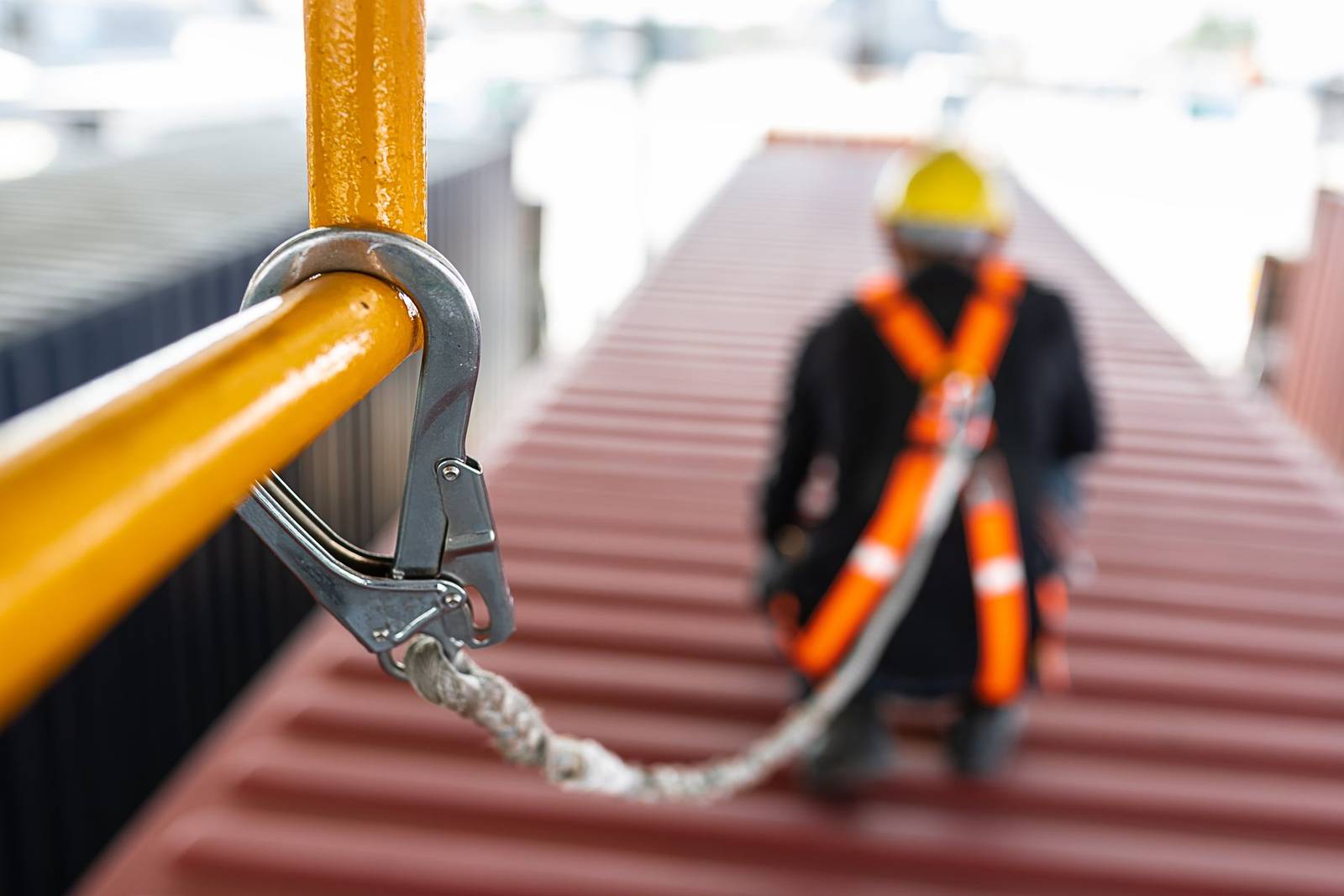
- Fall protection competent person — evaluates anchorages, selects and inspects systems, calculates clearance, supervises the rescue plan, and removes damaged gear from service. The course runs on your roof, your steel, your anchor points — not stock photos of someone else’s.
- Confined space entry team — entrant, attendant, and entry supervisor trained together as a working unit under 1910.146 and 1926 Subpart AA, with atmospheric testing on your meters and permits written against your actual spaces.
- Scaffold competent person — supervises erection and dismantling, runs the pre-shift inspection, checks capacity, planking, access, and fall protection, and tags the scaffold in or out of service.
- Excavation competent person — classifies soil by test, not by eye; selects protective systems; and performs the daily inspections 1926.651(k) requires, plus re-inspections after rain, vibration, or any change in conditions.
Fall Protection: The Role Behind the Harness
Everyone on the crew needs authorized-user training — how to wear a harness, inspect it, and tie off to an approved point. The competent person carries the heavier load: deciding what an approved point is, verifying the 5,000-pound-per-worker anchorage rule or the engineered two-times-arresting-force alternative, doing the clearance math that keeps a fallen worker off the lower level, and owning the plan that gets a suspended worker down before suspension trauma sets in. Falls have been the number-one killer in construction every year for decades, and fall protection tops OSHA’s most-cited list nearly every year. The competent person is the standard’s answer to both statistics.
Confined Spaces: A Team, Not a Title
Permit-required confined space work technically assigns duties to entrants, attendants, and entry supervisors rather than a single “competent person,” but the logic is identical: named people, defined duties, real authority. The attendant who can order an evacuation, the supervisor who signs and cancels the permit, the entrant who knows the signs of exposure — those roles have to be trained, and they have to be trained together, because every confined-space fatality report reads the same way: the plan broke at a handoff between roles. We train your team as a unit on your spaces — tanks, vaults, pits, crawl spaces — with your monitors and your retrieval gear.
Scaffolds: The Pre-Shift Gate
A scaffold gets built once but used for weeks, and it changes constantly — a plank borrowed here, a guardrail unclipped there, a caster left unlocked after the weekend. That’s why Subpart L requires competent-person inspection before each work shift and after anything that could affect structural integrity. The course covers erection and dismantling supervision, capacity and loading, plank grades and spans, access rules, falling-object protection, and the 4:1 height-to-base ratio for freestanding towers — then puts your leads on your actual scaffold to run inspections until the checklist is muscle memory.
Excavation: The Daily Verdict
Trench walls don’t negotiate. A cubic yard of soil weighs about as much as a pickup truck, and a collapse buries a worker faster than anyone can react. Subpart P’s answer is a competent person who classifies the soil (Type A, B, or C — by thumb penetration test and pocket penetrometer, not by looking), selects the protective system (slope, bench, shore, or shield), and inspects the excavation daily and as conditions change. Rain overnight, a new spoil pile too close to the edge, a vibrating compactor working nearby — each one reopens the question. We teach the tests hands-on in your dirt whenever the site allows it.
The Four Roles at a Glance
| Role | Standard | Core duties | Inspection cadence |
|---|---|---|---|
| Fall protection CP | 1926 Subpart M / 1910 Subpart D | Anchorage evaluation, system selection, clearance calculation, rescue plan | Equipment before each use; systems per plan |
| Confined space team | 1910.146 / 1926 Subpart AA | Permits, atmospheric testing, attendant watch, entry supervision | Test before entry and as required during entry |
| Scaffold CP | 1926 Subpart L | Erection/dismantle supervision, capacity, tagging | Before each work shift and after alterations |
| Excavation CP | 1926 Subpart P | Soil classification, protective systems, water controls | Daily before entry and after every changed condition |
User-Level vs. Competent-Person: Who Needs Which
You don’t need a site full of competent persons — you need every exposed worker trained to user level and at least one competent person per crew, per shift, per site where the hazard exists. A subcontractor with three framing crews working fall exposure needs three designated competent persons, not one name shared across a phone tree. When we scope a class, we usually run the full crew through user-level training in the morning and keep the designated leads for the competent-person module in the afternoon — one mobilization, both layers, documented separately so the roles are clear on paper.
How the On-Site Course Runs
Every course in this track is instructor-led at your site — we come to the project or the plant, anywhere in the country. Classroom time covers the standard, the duties, and the decision rules; field time happens on your equipment and your conditions, because a competent person trained on generic slides has never actually made the call they’ll be asked to make Monday morning. Class length depends on the course and the level — user-level classes typically run a half day, competent-person modules a full day — and we’ll scope it against your operation when you request a quote.
Your trainer is a working safety professional, not a presenter. 3P Safety’s founder has been in the field since 2005 as an OSHA 500 authorized outreach trainer, NCCCO-certified crane operator and inspector, and lift director — the same person who wrote our inspection checklists teaches the people who will use them.
Picking the Right Person for the Role
Training can build the knowledge half of the definition, but you’re choosing the judgment half when you pick the name. The best competent persons we train share three traits: they’re on the work daily (a visitor can’t inspect what they don’t see), they’re already the person the crew asks when something looks off, and they’re comfortable being unpopular for ten minutes — because stopping a pour, failing a scaffold, or holding a crew out of a trench is exactly the moment the role exists for. Seniority alone is the wrong filter; we’ve trained 25-year hands who shouldn’t hold the title and second-year leads who were born for it. Pick for eyes and spine, then send them to us for the rest.
Documentation That Survives an Audit
Training that isn’t documented didn’t happen — not to OSHA, not to your GC, not to the insurance auditor. Every competent-person course we deliver closes with a records package: signed rosters, written evaluations, wallet cards, course outlines keyed to the standard, and a designation-letter template your company signs to make the appointment official. That letter is the piece almost everyone is missing. It names the person, the site, and the scope of authority — including stop-work — and it’s the first thing we’d hand a compliance officer who asks who your competent person is.
Frequently Asked Questions
Is there an official OSHA “competent person certification”?
No. OSHA doesn’t certify competent persons and doesn’t accredit competent-person courses. The employer designates the competent person; training is the evidence that the person is “capable of identifying hazards” as the definition requires. What matters is that the training is real, documented, and matched to the hazard — which is exactly what the designation letter and records package are for.
How often does competent-person training need to be renewed?
The construction standards don’t put a fixed expiration on it, but retraining is expected when the work changes, when inspections or incidents show gaps, or when the standard itself changes. Most of our clients refresh competent persons every two to three years as a matter of policy, and general contractors increasingly write that cycle into their prequalification requirements.
Can one person be the competent person for several hazards?
Yes, if they’re genuinely trained and capable for each one. A superintendent can be the designated competent person for both scaffolds and excavations if they hold both trainings and have the authority to act. What doesn’t work is stretching one person across multiple simultaneous crews or sites — a competent person who isn’t present enough to inspect isn’t functioning as one.
Do you train our whole crew or just the leads?
Both, usually in the same visit. The standards require user-level training for every exposed worker and a competent person over the work, so we run the crew course first and the competent-person module for your designated leads after. Each level gets its own certificate so your records show who holds which role.
What should we have ready for the field exercises?
Whatever the crew actually uses: harnesses and anchors for fall protection, your gas monitor and retrieval gear for confined space, the scaffold you have standing, an open excavation if one is available. None of it is mandatory — we bring demonstration equipment — but every exercise we can run on your gear makes the training land harder.
We’re not in construction. Does this still apply?
Largely, yes. General industry has its own versions of the same logic — permit-space programs under 1910.146, walking-working-surface inspections under the 2017 Subpart D rules, powered-platform and ladder requirements — and plants designate competent or qualified persons for them the same way. We map the course to whichever side of the CFR your work lives on.
Ready to designate yours? Tell us the site and the roles and we’ll scope the class. Browse the rest of the catalog while you’re here: OSHA 10 & 30 outreach for the crew’s baseline cards, equipment operator certification, workplace compliance courses, and specialty & high-hazard training — or see all 27 courses and where we deliver.