
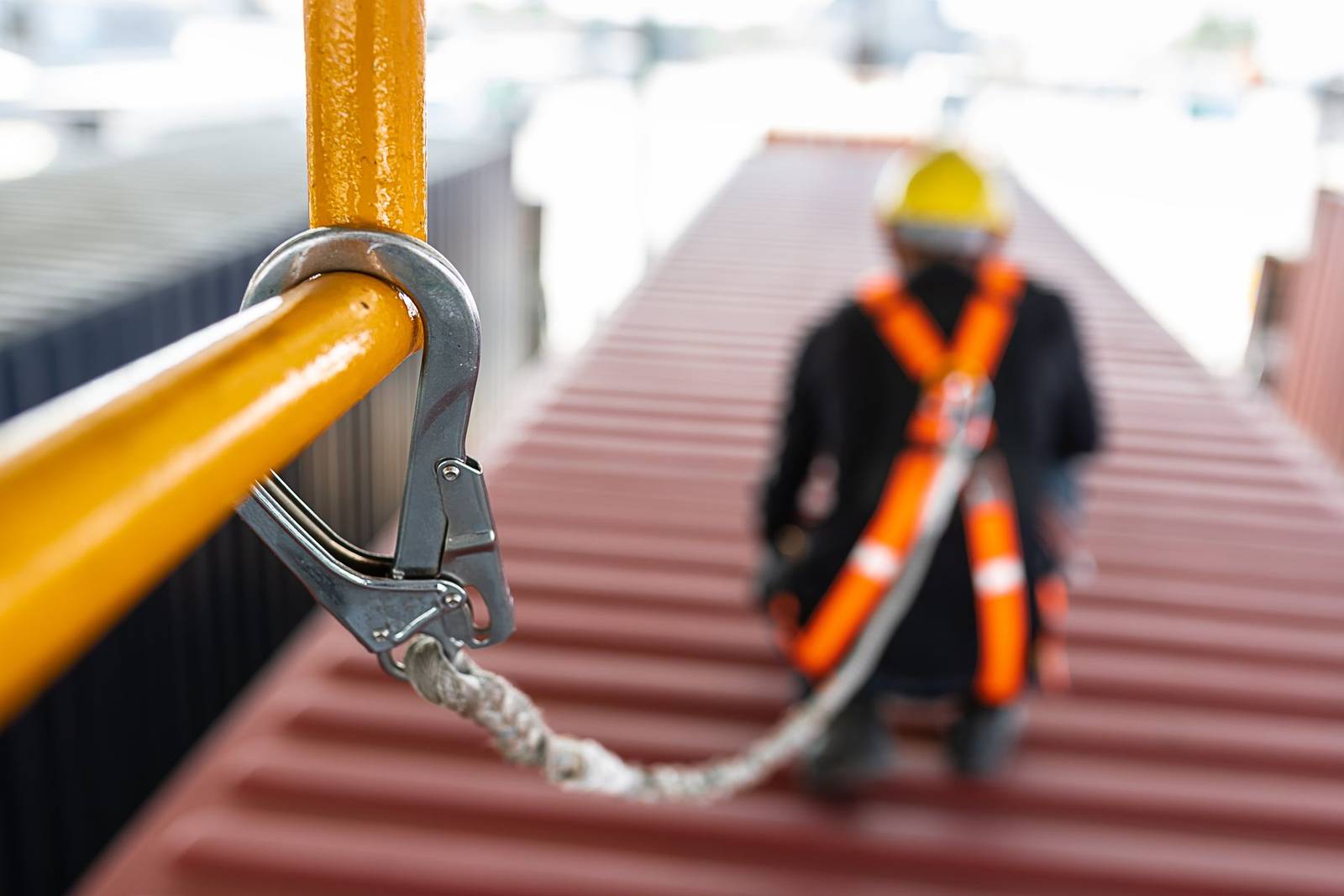
Scaffolding sits in OSHA’s most-cited top ten essentially every year, and the citations follow a pattern: missing guardrails, bad planking, no proper access, and — behind almost all of it — no genuine competent person on the ground. Subpart L leans on that role harder than almost any other standard: a competent person must supervise erection, alteration, and dismantling, and must inspect every scaffold before each shift. If nobody on your crew truly holds that role, the whole scaffold program is paper.
3P Safety Training delivers scaffold training on-site at two levels: user training for everyone who works from scaffolds, and competent-person training for the leads who erect, inspect, and sign off. Both levels train on your systems — frame, tube-and-clamp, system scaffold, or mobile towers — because a competent person qualified on paper but strange to your hardware is not qualified at all.
What Subpart L Actually Requires
- Capacity and construction — scaffolds support at least 4 times the intended load (1926.451(a)); suspension rigging at 6 times
- Full planking, safe access, and fall protection at 10 feet — guardrails or personal fall arrest, plus the falling-object protection most sites forget
- A competent person to supervise erection, alteration, moving, and dismantling — and to inspect scaffolds and components before each work shift and after anything that could affect integrity
- A qualified person to design certain scaffolds and rigging — and the training requirement itself (1926.454) for every employee who works on or erects a scaffold
- Clearance from power lines, tie-in requirements at height-to-base ratios, and mobile-scaffold rules your rolling towers live under
Two Levels, Matched to the Roles
| Scaffold User | Competent Person / Erector | |
|---|---|---|
| Who | Everyone who works from a scaffold | Leads who erect, alter, dismantle, and inspect |
| Length | Half day, on-site | Full day, on-site, hands-on |
| Core content | Fall and falling-object hazards, load limits, access, electrical clearance, when not to climb on | Everything in user training plus erection standards, component inspection, planking and capacity, tagging, pre-shift inspection duties, and documentation |
| Outcome | 1926.454(a) training record | Written and practical evaluation + designation letter for your program |
What the Competent-Person Day Covers
- Erection, alteration, and dismantling sequence on your system — including the fall-protection question during erection that Subpart L answers differently than most people assume
- Component inspection: bent frames, cracked welds, delaminated planks, mixed-manufacturer components, and the rejection criteria
- Foundation and support: base plates, mudsills, leveling, and the soil-bearing reality checks
- Height-to-base ratios, tie-ins, and outrigger requirements
- Pre-shift inspection routine and a tagging discipline (green/yellow/red) crews actually follow
- Rolling scaffold rules — the casters, the 4:1 ratio, and the no-riding rule with its narrow exceptions
- Scenario work: wind, adjacent power lines, mixed trades on shared scaffolds, and stop-work calls
Suspended scaffolds and specialty rigging cross into hoisting territory — where a scope involves rigging design or crane support, our sister company 3P Safety Crane & Rigging Training carries that side, and we coordinate the visits.
Format, Delivery, and Documentation
Instructor-led at your site. User training runs a half day; the competent-person course runs a full day with hands-on inspection work on your scaffold stock — deficient components make the best teaching aids, and every yard has a few. Completers receive certificates and wallet cards; competent-person candidates leave with scored evaluations and a designation template. Everything is documented to the standard we bring to federal work, because scaffold citations are exactly where inspectors ask for training records first.
Industries and Crews We Train
Scaffold work looks different on a refinery turnaround than it does on a masonry job, and the training tracks the trade:
- Masonry and concrete contractors — frame scaffold at height for weeks at a stretch, where daily inspection discipline and proper planking are the whole game
- Industrial and refinery maintenance — tube-and-clamp and system scaffold in congested process units, often around energized lines and live equipment
- Commercial construction and restoration — system scaffold and mast climbers on facades, where tie-in and access rules get complicated fast
- Painting, insulation, and specialty trades — high-cycle scaffold users whose exposure hours dwarf the crews that built the scaffold
- Facility and plant maintenance teams — the crews that throw up a rolling tower to change a light and need the mobile-scaffold rules cold
How the On-Site Visit Runs
- Scoping call. Which scaffold systems you run, how many users versus competent-person candidates, and the site — a refinery turnaround and a masonry job get different emphasis and different examples.
- Bring your stock. Class trains on your frames, planks, and components; deficient parts pulled from the yard become the inspection lesson, because a cracked weld teaches better than a photo.
- Training day. Users run a half day of hazard, load, and access training with a written test; competent-person candidates continue into erection standards, component inspection, tagging, and pre-shift inspection duties, with hands-on time on your actual scaffold.
- Documentation before we leave. Certificates, wallet cards, tests, competent-person evaluations, and a designation template ready for signatures.
What Drives the Quote
Three inputs: how many people at each level, one site or several, and location for instructor travel. Stacking user training in the morning with competent-person training in the afternoon is the most efficient shape, and combining scaffold with a fall protection course in the same visit spreads the travel across both. You get one price for the visit — request a quote or call (252) 274-0583.
The Pre-Shift Inspection, Item by Item
Subpart L requires a competent person to inspect every scaffold before each work shift and after anything that could affect its integrity — and the inspection only protects you if it’s real. The walk our competent-person module drills: base plates and mudsills bearing on solid ground, legs plumb and braced, no mixed components from different manufacturers, planking graded and spanning correctly with proper overlap, guardrails at height on all open sides, safe access in place — because climbing the frame is a citation with a body attached — tags current, and the area below controlled for falling objects.
Ten disciplined minutes, documented, every shift. The morning a caster was left unlocked or a plank walked away over the weekend is the morning that routine earns its keep.
The Numbers Crews Actually Get Wrong
Most scaffold citations are arithmetic failures wearing a hardware costume. The course drills the numbers until they’re reflex: scaffolds and components carry four times the maximum intended load; guardrails between 38 and 45 inches with midrails; planking that doesn’t deflect more than 1/60 of the span under load; platforms fully planked with no more than one-inch gaps; the 4-to-1 height-to-base rule before a freestanding tower needs ties, guys, or outriggers; and fall protection required at 10 feet in scaffold work — not the 6-foot construction trigger crews assume.
We teach loading with the actual weights your trades stage: a mud-stocked mason square, a pallet of block, two workers and their tools — and suddenly “light duty” planking math matters.
Users, Erectors, and the Competent Person: Who Owes What
Subpart L splits people three ways, and the training has to match. Users — anyone who works from the scaffold — need hazard training: falls, falling objects, electrical clearances, load limits. Erectors and dismantlers need more: they work the scaffold while it’s incomplete, under a competent person’s supervision, with fall protection decisions made phase by phase. The competent person owns supervision of erection and alteration, the pre-shift inspection, and the authority to tag a scaffold out of service against schedule pressure. We deliver all three layers in one visit and document them separately, because an auditor will ask which hat each name wears.
Supported, Suspended, and the Rolling-Tower Trap
Frame and system scaffolds get the attention, but two cousins generate outsized trouble. Suspended scaffolds — swing stages and two-point rigs — add hoists, tiebacks, and independent lifelines, and they demand their own training focus before anyone steps aboard. And the humble baker’s rack rolling tower hurts more people per square foot than almost anything on site: workers ride them while moving, casters stay unlocked, and the 4-to-1 rule gets ignored because “it’s just a little tower.” The class treats both with the specific respect their incident histories have earned.
Access, Electrical Clearances, and Falling-Object Control
Three failure themes fill out the citation files beyond the headline items. Access: workers climb cross-braces because the ladder or stair unit never got installed — the standard demands safe access when platforms sit more than two feet above the point of access, and “the frame is basically a ladder” is a sentence that precedes injuries. Electrical: scaffolds are conductive towers erected by people watching their feet, and the clearance tables — roughly ten feet from lines under 50 kV, more above — must be settled before the first frame stands, with the utility involved when work must intrude. Falling objects: toeboards, debris nets, barricaded drop zones below, and hard-hat discipline for everyone who walks near the tower, because a wrench from forty feet doesn’t care how experienced the man below is.
Classroom to Steel: How the Training Day Splits
The course meets your scaffold where it stands. Classroom time covers Subpart L’s structure, the capacity math, and the role duties; field time happens on the systems in your yard or on your project — frame, system, or tube-and-clamp — with erection and inspection exercises run on the real thing. User classes typically fit a half day; the competent-person module extends to a full day with graded inspection scenarios where we salt the scaffold with the defects the citation lists love and your candidates find them or learn why they didn’t.
Setup is simple: the scaffold, the components you actually stock, and your leads present for the CP module. Rain plans exist; wind plans are part of the curriculum.
The Paper That Proves the Program
The records package maps to what a compliance officer or GC audit actually requests: rosters and certificates split by level — user, erector/dismantler, competent person — the written designation naming your competent persons and their authority, a pre-shift inspection checklist formatted for daily use with a completed example, and the tagging procedure that turns green-yellow-red into policy instead of habit. If your program already has forms, we teach to them and flag the drift; if it doesn’t, you leave with a working set keyed to Subpart L’s actual language.
Frequently Asked Questions
Does a rented or subcontracted scaffold change who needs training?
No. Whoever’s employees work from it need user training, and if your people alter it — even moving one plank — you’ve entered erector territory under your own competent person. The rental agreement moves the hardware, not the duty.
How often should scaffold training be refreshed?
The standard requires retraining when work changes, when scaffold types change, or when inadequacies show up in inspections or behavior. Practically, most of our clients refresh users every two to three years and competent persons on the same cycle — and GCs increasingly write that expectation into their subcontracts.
How often do scaffolds have to be inspected?
By a competent person before every work shift, and after any event that could affect structural integrity — a vehicle strike, a windstorm, a modification. The inspection is not annual or weekly; it is every shift, which is why the competent person has to be someone on your crew, not a consultant who visits monthly.
At what height does scaffold fall protection kick in?
Ten feet above a lower level for most scaffolds — guardrail systems or personal fall arrest, with specific rules by scaffold type. Note that is different from the general 6-foot construction trigger, one of several places Subpart L runs its own numbers.
Can one person be the competent person for scaffolds and fall protection?
Yes, if genuinely qualified for both — the designations are role-and-standard specific, not one general title. Many clients run our scaffold and fall protection competent-person courses in the same visit for exactly that reason.
Do scaffold users really need formal training if they never build the scaffold?
Yes — 1926.454(a) requires training for each employee who works on a scaffold, delivered by a qualified person, covering the hazards and the load limits. “The erector knew what he was doing” does not cover the crew working from it.
What about retraining?
Required when scaffold types or site conditions change, when new hazards appear, or when a worker’s performance shows the training did not hold. After any scaffold incident or near-miss, retraining the affected crew is both required in spirit and the only defensible move.