
Hot work — any welding, cutting, grinding, brazing, or torch work that produces sparks, heat, or flame — starts fires that regularly cause fatalities and destroy facilities. The pattern in the case files is grimly repetitive: a spark travels farther than anyone expected, lands on something combustible nobody moved, and there was no fire watch to catch it. OSHA regulates hot work through its welding and cutting standards, and the industry’s permit-and-fire-watch system exists precisely because the hazard outlasts the job — most hot-work fires ignite after the torch goes cold.
3P Safety Training delivers hot work safety training on-site, built around your operations, your permit system, and the specific fire risks of your facility — because a permit program only works if the people filling out the permit understand what it is protecting against.
What Safe Hot Work Requires
- A hot work permit system authorizing the work, documenting the precautions, and defining the area
- Moving combustibles at least 35 feet from the work, or shielding what cannot be moved
- A trained fire watch during the work and — critically — for at least 30 minutes after it ends, with monitoring extended where risk warrants
- Fire extinguishing equipment staged and ready at the work area
- Atmospheric testing where flammable vapors could be present, and confined-space rules where the work is inside a vessel
- Proper ventilation and PPE for the welding hazards themselves — fumes, UV, and hot metal
What the Course Covers
- Fire and explosion hazards of hot work: how far sparks travel, how slag hides, and why the danger persists after the job
- The hot work permit line by line — who authorizes, what precautions get verified, and how the permit is closed out
- Fire watch duties: staying in position, watching for smoldering, having extinguishing means in hand, and the 30-minute-minimum post-work monitoring that stops most hot-work fires
- Combustible control: the 35-foot rule, shielding, and covering floor and wall openings sparks fall through
- Welding and cutting health hazards: fume control and ventilation, UV and eye protection, and compressed-gas cylinder safety
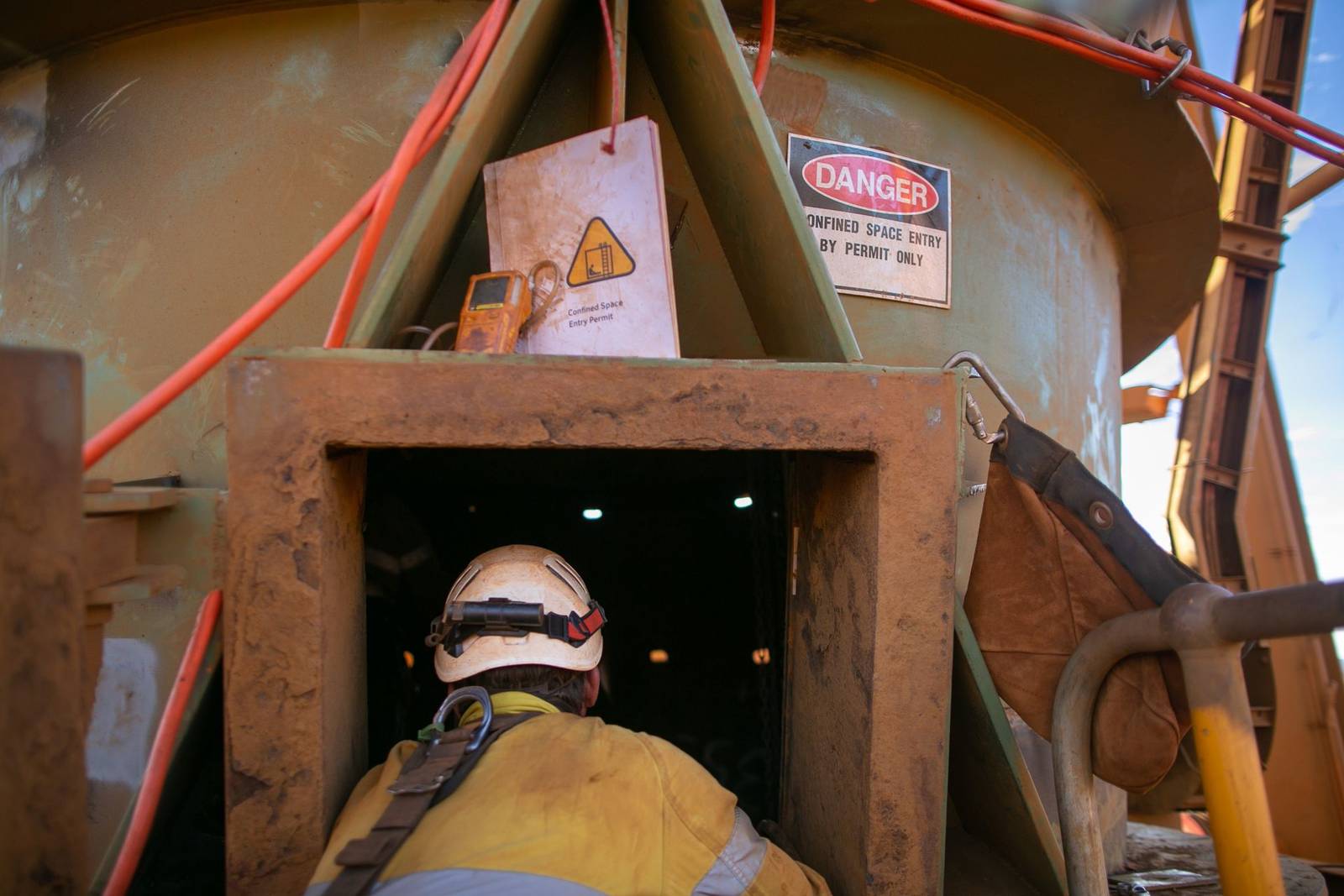
- When hot work enters a confined space and permit-required entry rules stack on top
- Special hazards: flammable atmospheres, tanks that held product, and the “empty” container that is not
Format, Duration, and Delivery
A focused instructor-led session at your facility for welders, cutters, fire watches, and the supervisors who authorize permits. It integrates with fire prevention and emergency action plan training and, where the work happens inside vessels, with confined space entry. Completers receive certificates and records; where your permit form or fire-watch procedure has gaps, we flag them, because those are exactly the gaps that show up in a fire investigation.
Who We Train
Welders, cutters, fire watches, and the supervisors who authorize permits all need hot-work training:
- Fabrication and welding shops — and their crews working out in the field
- Industrial and refinery maintenance — hot work around flammable process materials
- Construction and steel erection — cutting and grinding near combustibles
- Facilities and maintenance teams — the occasional torch job that still needs a permit and a watch
How the On-Site Session Runs
We build the session around your permit system and the specific fire risks of your facility, and drill the fire-watch duties — including the 30-minute-minimum post-work watch that stops most hot-work fires. We schedule around your operation — including off-shifts and turnarounds — and every session ends with certificates and a training record formatted for your files, handed over before we leave. One price for the visit: request a quote or call (252) 274-0583.
The 35-Foot Rule and the Sparks That Ignore It
The working radius of hot work is 35 feet — within it, combustibles get moved; what can’t move gets covered with fire-resistive blankets or shields; floor and wall openings get sealed so slag can’t drop a level or slip into a cavity and smolder inside the wall. The class teaches the rule alongside the physics that defeats lazy versions of it: sparks bounce, roll, ride drafts, and travel down conveyors and chutes far past 35 feet, and cutting on one side of a metal wall heats the far side above ignition temperatures without a single visible spark. The pre-work walk — above, below, behind, and downstream — is the module’s spine.
The Permit Is a Conversation, Not a Form
A hot work permit that works is a forced checklist conversation between the person authorizing and the person cutting: what’s the fuel within the radius, what got moved or covered, is the fire watch posted and equipped, are extinguishers charged and staged, do sprinklers stay in service, when does the watch end. The signature means someone with authority walked the area and accepted it — which is why permits signed from the office are the ones that precede the loss reports. We teach your supervisors to run the permit as that walk, and we leave a permit format that matches your operation instead of a generic pad.
Fire Watch: One Job, Done Completely
The fire watch has a single duty — watch for fire — with extinguishing equipment in hand, training to use it, and the authority to stop the work and sound the alarm. No fetching parts, no grinding the next piece, no phone. And the watch outlives the torch: OSHA requires at least 30 minutes after the work ends, because slag and heated members ignite on a delay, and the fire-protection standard behind these rules has pushed monitoring expectations even longer in its recent editions. Most hot-work catastrophes in the case files happen in exactly that window — crew packed up, watch released early, building empty. The class makes the after-watch non-negotiable.
The Cheapest Fire Is the Torch You Didn’t Light
The standard’s quiet first question is whether the hot work needs to happen there at all: cut it in the designated hot-work area where the environment is controlled, use mechanical alternatives — pipe cutters, saws, hydraulic shears — where they’ll do the job, or schedule the work when the adjacent process (and its vapors) is down. On any site storing flammables, “can we do this cold, or elsewhere, or later?” eliminates more fire risk than every blanket in the gang box — and it’s the habit the supervisor module drills hardest.
Tanks, Drums, and the “Empty” Container Lie
The deadliest words in hot work are “it’s empty.” A drum that held flammable liquid, a tank with an inch of sludge, a tote that was rinsed once — each can hold a vapor space sitting inside its explosive range, and a tack weld or a cutting torch on the shell is the ignition source the vapor was waiting for. The fatality files are full of workers cutting the top off “empty” drums.
The class draws the hard line: no hot work on containers that have held flammables or combustibles until they’ve been cleaned to a verified standard, gas-tested by someone qualified, and either purged or inerted — and when inerting with nitrogen enters the picture, so does an asphyxiation hazard with rules of its own. Crews learn the screening questions, the “when in doubt, cold-cut” alternatives, and why this one category of job always escalates beyond the standard permit.
The Designated Area: Making Routine Welding Boring
Not every weld needs a permit — and knowing where that line sits is what keeps the permit system respected instead of resented. A properly established designated hot-work area — the maintenance shop’s welding bay, built of noncombustible construction, kept clear of combustibles to a maintained radius, with extinguishing equipment staged and ventilation handled — lets routine fabrication run permit-free, exactly as NFPA 51B intends. The class helps you formalize yours: the housekeeping standard that keeps the designation valid, the inspection that confirms it monthly, and the trigger discipline that sends every job outside that bay back into the permit system, no matter how small. Sites that get this split right issue fewer, better permits — and the crews stop treating the form as friction.
Gas Cylinders, Leads, and the Equipment Half of the Job
The fire triangle gets the headlines, but the equipment discipline keeps the day boring: cylinders secured upright with caps on when not in regulator service, oxygen stored its required distance from fuel gas or behind the fire-rated barrier, flashback arrestors and check valves where your torch setup calls for them, hoses inspected for the cracks and burns that turn a leak into a lance, and leads and grounds routed so the return current doesn’t find its own path through a bearing or a gas line. Maintenance and contractor crews get the site-coordination block too — who owns the permit when an outside welder works your floor, and how your emergency action plan and this program hand off if the watch loses the race. One visit covers welders, watchers, and authorizers as the single system the permit assumes.
Frequently Asked Questions
Do we need permits inside our own designated welding area?
A properly designed and maintained designated area — fire-resistive construction, no combustibles, equipment staged — is the one place routine hot work runs permit-free. Everything outside it is permit territory. The discipline that keeps the exemption honest is periodic re-inspection of the designated area itself, because combustibles migrate into empty corners everywhere on earth.
Who can serve as fire watch — does it require certification?
No card exists; capability does. The watch must be trained in the site’s alarm procedure and extinguisher use, know what they’re watching for, and hold stop-work authority — which is exactly the training block this course delivers, hands-on. Crews typically cross-train several members so the role never bottlenecks a job, and our roster documents who’s watch-qualified by name.
Does a contractor’s permit system or ours govern their work in our plant?
Yours is the floor; theirs can add but not subtract. Host employers own the hazards of their building — the vapors, the dust, the sprinkler status — so the host permit (or a joint one) with your authorized signer is the defensible pattern, and the class covers the host-contractor handshake explicitly because that seam is where multi-employer citations live.
How long does the fire watch have to stay after welding stops?
At least 30 minutes after hot work is completed, to detect and extinguish smoldering fires, with monitoring extended when the hazard warrants — some risk conditions call for longer. The post-work watch matters because slag and embers can smolder unseen for a long time before flaring, which is precisely how so many hot-work fires start after everyone thinks the job is done.
Do we need a permit for every cutting or grinding job?
A hot work permit is required whenever the work is done outside a designated, permanent hot-work area free of combustibles. A dedicated welding bay built for it may not need a per-job permit; the same work in a warehouse aisle absolutely does. The permit is the mechanism that forces the precautions to be checked before the sparks fly.
What’s the 35-foot rule?
Combustible and flammable materials should be moved at least 35 feet from the hot work, and where they cannot be moved, they must be shielded or covered. Thirty-five feet reflects how far sparks and slag realistically travel — and openings in floors and walls need covering too, because sparks fall through them to the level below.
Can we do hot work on a tank that held flammable liquid?
Not without rigorous precautions — an “empty” tank that held flammables can hold an explosive vapor mixture, and hot work on it has killed many workers. It requires cleaning, atmospheric testing, and often confined-space entry procedures. This is the highest-consequence hot-work scenario, and the course treats it accordingly.
Does brazing or soldering count as hot work?
Torch brazing and torch soldering do — open flame is the defining feature, not the metal temperature. Electric soldering irons generally fall outside permit programs, though housekeeping around them still matters. Your permit system’s definitions section settles the boundary, and the class teaches crews to check the definition rather than argue the label.
What should the fire watch actually have in hand?
Extinguishing equipment matched to what could ignite — typically a charged extinguisher of adequate rating, or a charged hose line where the exposure justifies it — plus the means to sound the alarm. Equally important is what they should not have: another task. A fire watch holding a grinder is a welder’s helper, not a fire watch.
Do insurers add requirements beyond OSHA for hot work?
Routinely — property carriers and FM-type engineering standards often require longer post-work monitoring, stricter permit documentation, and designated-area audits, and a hot-work fire with a skipped permit is one of the classic ways coverage disputes start. We build the class around the stricter of your regulatory and insurance obligations, because that’s the one that governs.