
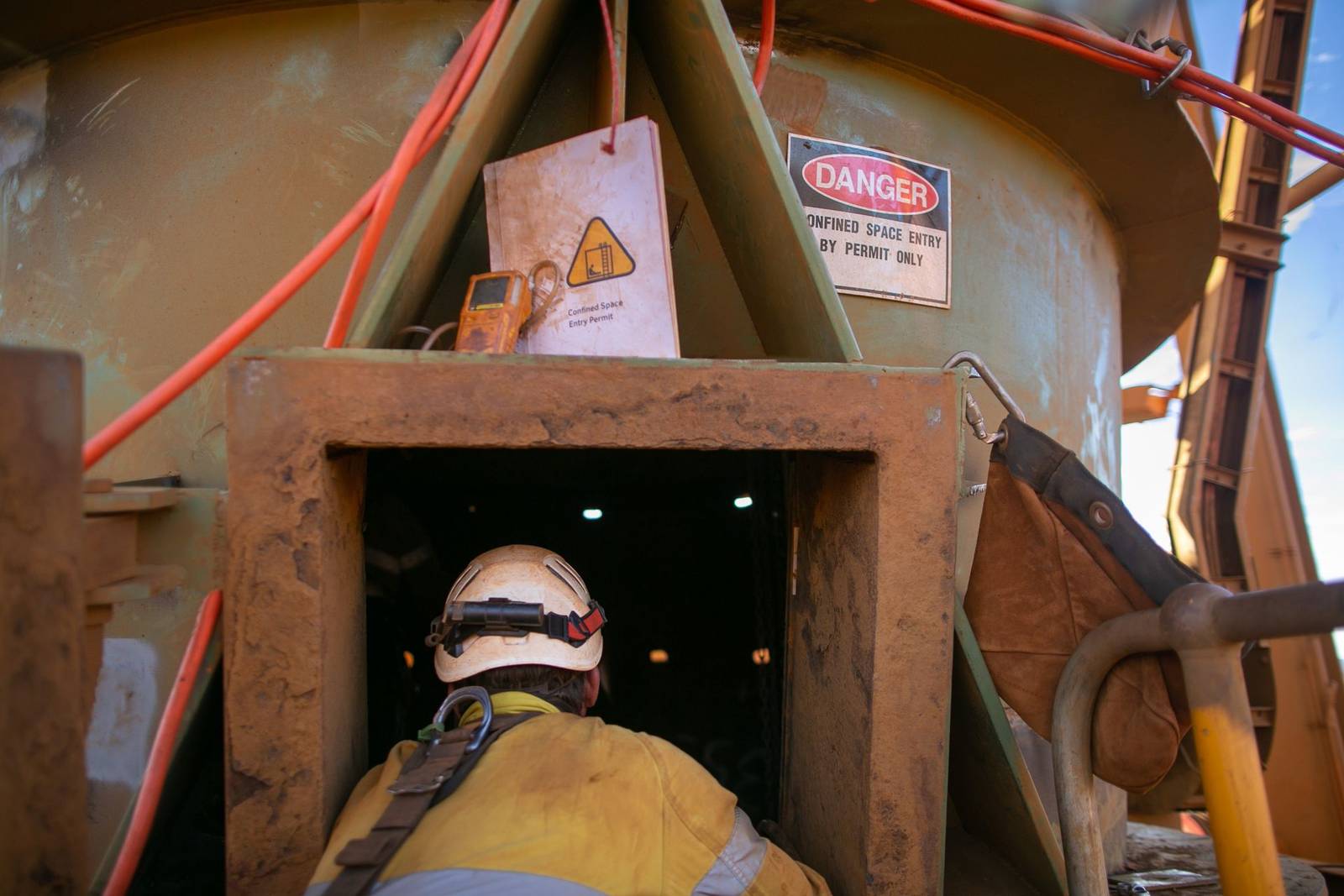
HAZWOPER — Hazardous Waste Operations and Emergency Response — governs the highest-consequence work in the safety catalog: cleaning up contaminated sites, running treatment and disposal facilities, and responding to hazardous-substance releases. The standard (1910.120) sets tiered training requirements matched to how much exposure a worker actually faces, and the tier a worker needs is a compliance decision with real teeth — putting a 24-hour worker into 40-hour work is a citable exposure and a genuine danger.
3P Safety Training delivers HAZWOPER training matched to your operation and your workers’ actual roles — the full 40-hour for hands-in-the-contamination work, the 24-hour for limited exposure, and the annual 8-hour refresher that keeps either current.
Which Tier Does a Worker Need?
| Course | Who It’s For | Refresher |
|---|---|---|
| 40-Hour | General site workers with regular, potential exposure at or above permissible limits — cleanup, sampling, drum handling on hazardous-waste sites | 8-hour annually |
| 24-Hour | Occasional-site workers unlikely to exceed exposure limits, or those visiting only for specified tasks | 8-hour annually |
| 8-Hour Refresher | Anyone maintaining a current 40- or 24-hour certification | Itself, every 12 months |
| 8-Hour Supervisor | On top of 40/24-hour training, for those managing site workers | 8-hour annually |
There is also a separate emergency-response track (awareness, operations, technician, and above) for people who respond to releases rather than work planned cleanups — a different branch of the same standard, scoped to the responder’s role.
What the Training Covers
- The HAZWOPER standard, site characterization, and the written safety and health plan
- Hazard recognition: chemical, physical, and the toxicology that drives exposure limits
- Air monitoring and the PPE levels A through D — selecting, donning, working in, and decontaminating each
- Site control: the hot/warm/cold zone layout and why the lines are not suggestions
- Decontamination procedures that keep contamination from riding home on people and equipment
- Medical surveillance, exposure monitoring, and the health program behind the work
- Confined spaces, permit entry, and respiratory protection as they apply on waste sites
- Emergency response and contingency planning for the release that was not the plan
Credentialing Note — Read This First
HAZWOPER’s higher tiers carry specific instructor-qualification and hands-on requirements, and the 40-hour in particular includes supervised field experience. We scope every HAZWOPER engagement to confirm the delivery method and instructor credentials meet the standard for the exact tier your workers need before we schedule — no shortcuts, because a HAZWOPER card that does not hold up is worse than none on a contaminated site. Tell us the work and the roles, and we will confirm the right course and how it must be delivered.
Format and Delivery
Delivered to your operation’s needs, matched to role and exposure. The 8-hour refresher is an annual requirement for anyone holding a 40- or 24-hour certification, and lapsed refreshers are the most common way workers lose current status — we help standing clients track the annual date so certifications never quietly expire between jobs. Completers receive certificates and records appropriate to the tier.
Who We Train
HAZWOPER covers the workers on and around hazardous-substance sites and releases, at the tier their exposure demands:
- Environmental and remediation contractors — cleanup, sampling, and drum handling
- Treatment, storage, and disposal facilities — TSDF operations staff
- Emergency-response and spill teams — the awareness-through-technician tiers
- Industrial crews with hazardous-waste duties — occasional-site and supervisory roles
How the On-Site Session Runs
Because the higher tiers carry strict instructor-qualification and hands-on requirements, we scope every HAZWOPER engagement to confirm the delivery method meets the standard for your exact tier before we schedule. We schedule around your operation — including off-shifts and turnarounds — and every session ends with certificates and a training record formatted for your files, handed over before we leave. We match the tier to the work and quote it accordingly: request a quote or call (252) 274-0583.
Choosing the Right Tier — the Decision That Saves a Week of Wages
Most HAZWOPER purchasing mistakes happen in the first five minutes, when somebody defaults to “just get everyone the 40.” The tier follows the work, and buying wrong in either direction costs real money — a week of wages per over-trained worker, or a citable exposure per under-trained one.
| Tier | Who it’s for | Field requirement | Keeps current with |
|---|---|---|---|
| 40-Hour | Workers on uncontrolled hazardous-waste sites with exposures at or above permissible limits — remediation crews, sampling techs, drum handlers | 3 days supervised field experience | 8-hour annual refresher |
| 24-Hour | Occasional site workers and those on fully characterized sites where exposures stay under limits — surveyors, inspectors, visiting engineers | 1 day supervised field experience | 8-hour annual refresher |
| Supervisor +8 | Anyone directly overseeing hazardous-waste operations, stacked on top of their worker-level tier | Included in oversight duties | 8-hour annual refresher |
| Response levels (q) | Plant personnel who act on chemical releases — awareness, operations, or technician level by role | Per level | Annual refresher or competency demonstration |
We scope the tier against your actual task list before quoting, and if the honest answer is that your crew only needs awareness-level response training, we’ll say so — a smaller class you actually needed beats a bigger one you didn’t.
The Field-Experience Requirement Nobody Budgets For
The classroom hours are only half the qualification. 1910.120(e) also requires supervised field experience — three days for 40-hour workers, one day for 24-hour workers — performed under a trained, experienced supervisor before a worker operates independently. Companies routinely discover this after the certificates arrive, when a client’s site auditor asks who supervised the field days and where that’s documented.
Our course closes with the field-experience framework: the documentation template, what the supervising person must watch for, and how to log the days so the qualification is complete on paper as well as in fact.
The Annual Refresher Is the Whole Ballgame
A 40-hour certificate with a lapsed refresher is a stale qualification — and remediation primes, refineries, and utilities check dates before they let a sub’s crew through the gate. The 8-hour refresher must land every twelve months, and OSHA’s guidance is blunt about lapses: a short gap means take the refresher promptly; a long one can mean repeating the full course.
The cheap insurance is a standing annual class date, which is exactly how we set up repeat clients — same month every year, roster updated for turnover, nobody’s badge dies quietly in a filing cabinet.
Medical Surveillance: The Parallel Track
HAZWOPER workers generally belong in a medical surveillance program under 1910.120(f) — baseline and periodic exams tied to their exposures — and anyone wearing a respirator needs the medical evaluation and fit test a legal respiratory protection program requires. Training and medical clearance are separate tracks that have to finish before independent work starts. We flag which of your people trip these wires during scoping so your occupational-health provider can run their side while we run ours.
Emergency Response: the Part That Reaches Ordinary Plants
Paragraph (q) is how HAZWOPER reaches employers who would never call themselves hazardous-waste companies. If a release at your facility would have your own people doing anything beyond evacuating — closing a valve, diking a spill, directing traffic around the plume — those people need emergency-response training at the right level: awareness for those who recognize and report, operations for those who act defensively, technician for those who go hands-on with the release.
The honest scoping question is simple: what does your emergency action plan actually ask people to do? We sort your roster into evacuate-only, awareness, and operations groups so the training matches the plan instead of contradicting it.
Hands-On Means Hands-On: Donning, Doffing, and Decon
A HAZWOPER course without suit time is a lecture series wearing a certificate. Ours puts workers physically through the skills the site will demand: donning and doffing protective ensembles in the right order — because doffing is where self-contamination happens; working in Level B and C configurations long enough to feel the heat load and the communication problems; running a decontamination line station by station; air monitoring with real instruments including bump checks and what the readings mean for the action level; and drum handling and spill containment exercises scaled to your operations. Workers who have sweated inside the suit make better decisions about work-rest cycles, buddy checks, and when to call the entry off — and that judgment is the actual product of the 40 hours.
The Site Safety Plan and the Documents Auditors Pull
Remediation primes and agency oversight run on paper, and your crew’s qualification file gets pulled at every mobilization. The complete set: training certificates with dates and tiers, the supervised field-experience documentation signed by the supervising person, current 8-hour refresher records, medical surveillance clearances where 1910.120(f) applies, respirator fit-test records for the models in use, and site-specific training sign-offs against the health and safety plan (HASP) governing the project. Our records package covers the training column completely and gives you the field-experience and site-specific templates for the rest — so the binder assembles itself instead of being reconstructed the night before a kickoff meeting.
Scheduling the 40 Without Losing a Crew for a Week
Forty hours is a real week, and pulling a full crew out of production for five straight days is the reason companies procrastinate this training into emergency pricing. The split formats solve it: five Fridays, two-and-three across two weeks, or back-to-back weeks of half days for operations running lean shifts. The 24-hour runs three days or its own splits; refreshers are a single day by design. On-site delivery is what makes the splits workable — no travel between sessions, no hotel bills multiplying by five, and a crew that sleeps at home through the whole qualification.
When Workers Change Employers: What the 40 Carries With Them
HAZWOPER certification follows the worker, not the company — a completed 40 or 24 doesn’t reset with a new W-2, and rehiring season shouldn’t mean retraining season. What the new employer owes is the delta: site-specific training on this project’s hazards and procedures, the supervised field days if the worker’s documentation doesn’t show them completed, and a check that the annual refresher chain is unbroken — because a refresher lapse, not the employer change, is what actually invalidates currency.
The class teaches office staff how to read an incoming worker’s packet: the original course certificate, the most recent 8-hour refresher date, medical surveillance status, and the field-experience sign-off. For staffing agencies and contractors who inherit certified crews, we audit those packets as part of class prep and refresh only the people who genuinely need it — which routinely saves a mobilization from a week of unnecessary seat time.
Frequently Asked Questions
Can a 24-hour qualification be upgraded to 40 later?
Yes — the standard allows workers to bridge up with the additional training and field days rather than starting over. If there’s a realistic chance your people will move onto higher-exposure work, tell us during scoping; we’ll structure the 24 so the upgrade path stays clean.
Do office and support staff at a waste site need HAZWOPER?
Only if they enter areas where exposure is possible. Staff who stay in clean administrative zones generally don’t need a tier — but the site map decides that, not the job title, and a characterized exclusion-zone boundary is what makes the answer defensible.
Does the refresher have to be exactly 8 hours in one sitting?
It has to total eight hours of relevant refresher content within the year; it doesn’t have to be one unbroken block. We run it as a single day for most clients because one mobilization is cheaper than four, but split formats are workable when shift coverage demands it.
What’s the difference between the 40-hour and 24-hour course?
Exposure. The 40-hour is for general-site workers with regular potential for exposure at or above permissible limits — the people doing hands-on cleanup. The 24-hour is for workers on site occasionally for a specific limited task, or unlikely to be exposed above limits. Matching the tier to the actual work is a compliance requirement, not a budgeting choice.
Is the 8-hour refresher really required every year?
Yes — anyone holding 40- or 24-hour HAZWOPER certification must complete an 8-hour refresher every 12 months to stay current. Let it lapse and the underlying certification is no longer valid for site work until it is re-established, which can mean repeating the full course.
Does everyone near a hazardous site need HAZWOPER?
Not necessarily the full 40-hour — the standard tiers training to exposure, and the emergency-response track has its own levels from awareness up. The right answer depends on each worker’s role and exposure potential, which is exactly what we scope before recommending a course. Over-training wastes money; under-training is a citation and a hazard.
Can HAZWOPER be done entirely online?
The classroom knowledge portions can be delivered in various formats, but the higher tiers require hands-on components and, for the 40-hour, supervised field experience that pure self-paced online cannot satisfy on its own. Because the delivery-method rules are strict at this level, we confirm the compliant approach for your specific tier up front rather than assuming.