
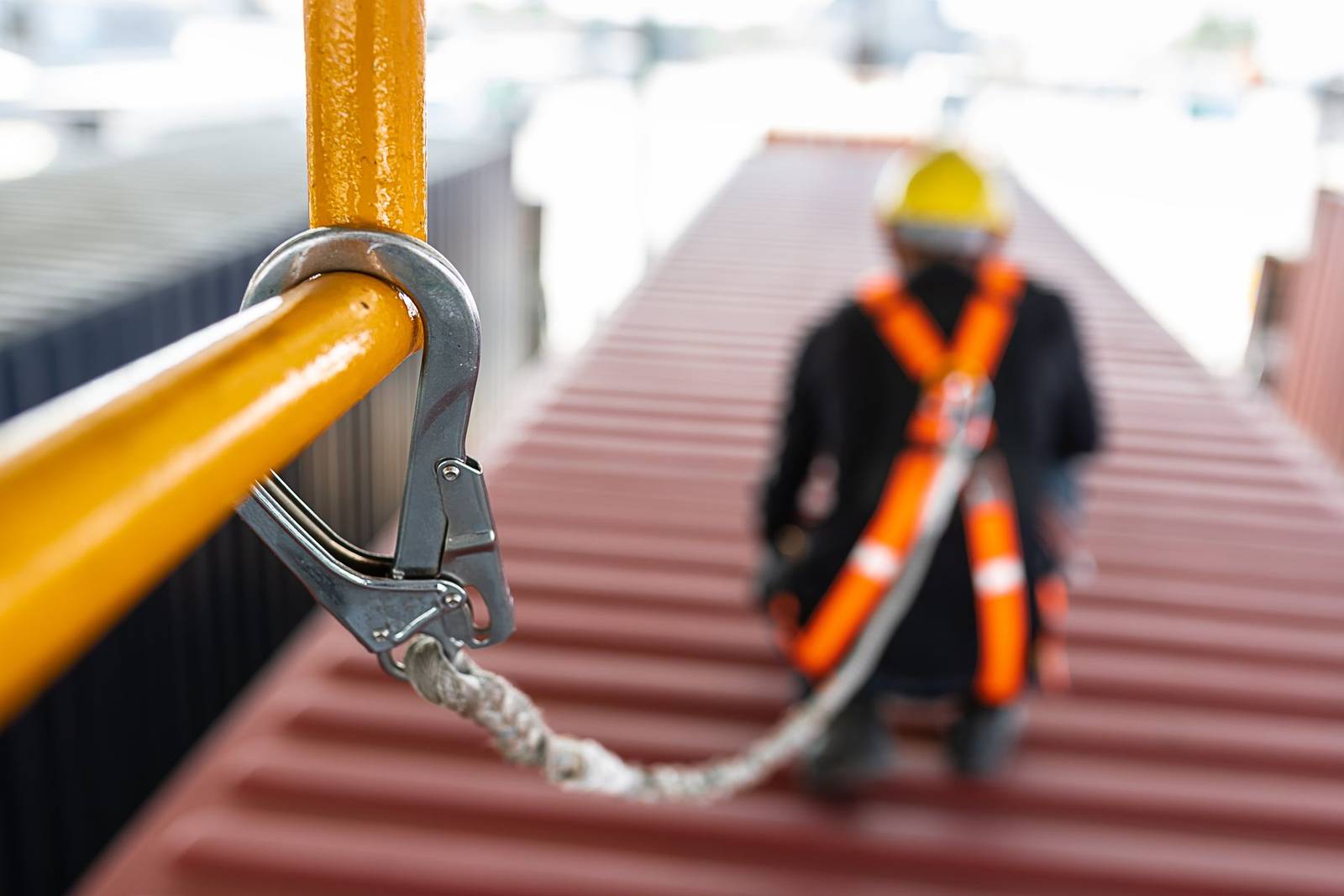
PPE is the last line of defense, not the first — and OSHA treats it that way. The employer must first assess the workplace for hazards, decide what PPE is needed, provide it, and then train each worker to use it. Skip the written hazard assessment and the whole program is built on sand; that certification is one of the first documents an inspector asks to see.
3P Safety Training delivers PPE training on-site, anchored to your hazard assessment and your equipment — hard hats, eye and face protection, hearing, hand, foot, and the head-to-toe selection logic that keeps the right barrier between your people and the hazard.
What the Standard Requires
- A documented hazard assessment certifying what hazards exist and what PPE they require (1910.132)
- Employer-provided PPE (with narrow exceptions) appropriate to the hazard
- Training so each worker knows when PPE is needed, which PPE, how to don, doff, adjust, and wear it, its limits, and its care
- Retraining when the workplace, hazards, or PPE change, or when a worker shows they did not retain it
What the Course Covers
- The hierarchy of controls — why PPE is last, and what that means for how it is managed
- Head protection: hard hat types and classes, and the electrical ratings that matter near energized work
- Eye and face: impact, chemical splash, and the assigned-task logic behind safety glasses vs. goggles vs. face shields
- Hearing protection basics and where a full hearing conservation program takes over
- Hand protection: matching glove material to the actual hazard, because the wrong glove is worse than none
- Foot protection, high-visibility apparel, and task-specific gear
- Donning, doffing, inspection, fit, and the maintenance that keeps PPE protective
- Your hazard assessment, reviewed live — attendees see why they wear what they wear
Where PPE crosses into specialized programs — respirators, fall protection, arc-rated clothing — those carry their own training mandates, and we point to the dedicated courses (respiratory protection, fall protection, arc flash / NFPA 70E) rather than pretending an hour of general PPE covers them.
Format, Duration, and Delivery
A session at your facility, tailored in length to your job and crew, for every employee required to use PPE, taught against your real hazard assessment and gear. Larger operations split across shifts in one visit. Completers receive certificates and training records; where the underlying hazard assessment is missing or stale, we flag it in writing, because the training is only as defensible as the assessment beneath it.
Who We Train
Every employee required to use PPE needs training tied to your written hazard assessment:
- Construction and industrial crews — head, eye, hand, and foot protection matched to real tasks
- Manufacturing and fabrication — face shields, cut-resistant gloves, and hearing protection
- Chemical handling operations — where the wrong glove is worse than none
- Warehouse and logistics — high-visibility apparel, safety-toe footwear, and impact protection
How the On-Site Session Runs
We teach against your real hazard assessment and gear, head to toe, and flag in writing where the underlying assessment is missing or stale. We schedule around your operation — including off-shifts and turnarounds — and every session ends with certificates and a training record formatted for your files, handed over before we leave. One price for the visit: request a quote or call (252) 274-0583.
The Hazard Assessment Walk — How It’s Actually Done
The written hazard assessment isn’t a form you download; it’s a walk you take. Area by area, task by task: what can strike the eyes or face, what can drop or roll onto feet, what can cut or chemical-burn hands, what falls from overhead, what’s loud, what splashes. Each finding maps to a PPE decision, and the whole thing gets certified — a document identifying the workplace evaluated, the person certifying, and the date.
We do the walk with your safety lead before class, and the assessment your company certifies becomes the backbone of the training itself — so when a worker asks “why do I need side shields in this bay,” the answer points at a documented hazard, not a policy nobody can explain.
Head to Toe, Matched to the Assessment
Selection is where programs earn trust or lose it. Hard hats by class (G for general, E where electrical exposure lives); safety glasses versus goggles versus face shields — and the drill that a face shield is secondary protection worn over glasses, never alone; gloves matched to the actual chemical on the SDS, because nitrile is not a universal answer; footwear to ASTM marks; and hearing protection rated to your noise survey’s numbers, not to whatever was cheapest that quarter.
The class teaches workers to read the marks — Z87+ on impact eyewear, the ASTM stamps inside a boot, the class label under a hard-hat brim — so damaged or wrong gear gets caught at the gang box, not in the incident report.
Who Pays: the Rule Managers Keep Relearning
With narrow exceptions, employer-required PPE is employer-paid. The standard’s payment rule leaves ordinary safety-toe footwear and prescription-inserted eyewear in a gray zone employers may pass to workers, but hard hats, gloves, respirators, face protection, and the rest of the required list ride on the company’s dime — including replacement when gear wears out through normal use. Getting this right isn’t just compliance; it’s the difference between PPE that gets replaced when compromised and PPE that gets rationed.
The Five Things Every Worker Must Be Able to Show
Subpart I is unusually specific about training: each worker must know when PPE is necessary, what PPE is necessary, how to don, doff, adjust, and wear it, the limitations of the gear, and its proper care, maintenance, useful life, and disposal. And the standard requires demonstrated understanding — which is why our class ends with hands-on stations, not just a quiz, and why retraining triggers when workplace changes, PPE changes, or observed behavior says the lesson didn’t hold.
Reading the Markings: What the Stamps Actually Promise
Every piece of compliant PPE carries its resume in tiny print, and the class teaches crews to read it. Safety glasses: the Z87 mark, and the “+” that separates basic from high-impact rating — the difference that matters at the grinder. Hard hats: Type I versus Type II (top-only versus lateral impact), Class G, E, or C for electrical rating, and the manufacture date molded under the brim that starts the replacement clock.
Footwear: the ASTM F2413 line that spells out impact, compression, and the EH rating that only works dry and intact. Hearing protection: the NRR number and the honest derating that turns a labeled 29 into a delivered low teens when fit is casual. Ten minutes of marking literacy turns “wear your PPE” into workers who can tell compliant gear from hardware-store lookalikes — and who notice when the wrong class of hard hat shows up near the switchgear.
Gloves and the Cut-Level Decision
Hand injuries dominate most plants’ incident logs, which makes glove selection the highest-leverage decision in the PPE program — and the most commonly improvised. The class walks the ANSI/ISEA 105 cut scale (A1 through A9) against your actual exposures: the A2 general-handling glove that has no business on the slitter line, the cut sleeve that should accompany blade changes, chemical-resistant gloves matched to the SDS’s permeation data rather than “the nitriles we always buy,” and the rotating-equipment exception every machinist should be able to recite — gloves near rotating spindles and drill presses trade a laceration for an entanglement, and bare, attentive hands are sometimes the safer spec. Supervisors leave with a one-page glove matrix by task, which quietly becomes the most-referenced document the visit produces.
Retraining: The Demonstrations That Reopen the File
PPE training carries a requirement most programs read past: each employee must demonstrate understanding and the ability to use the equipment properly before doing work that requires it — a skills show, not a signature — and retraining triggers whenever changes in the workplace or the equipment make old training obsolete, or when a worker’s habits show the lesson didn’t hold.
The class builds those triggers into supervision: the new chemical that changes the glove spec, the switch from earplugs to muffs that nobody re-demonstrated, the crew member spotted wearing the face shield without the safety glasses beneath it — each one legally reopens training, and each one is a five-minute fix when supervisors know to make it. We leave a trigger checklist and a demonstration sign-off format, so the retraining that inspections look for actually has a paper trail.
Fit, Comfort, and Why Good Gear Goes Unworn
Every supervisor knows the real PPE problem isn’t buying it — it’s the crew wearing it at 2 p.m. in July. The class deals with non-compliance at its actual roots: gear that doesn’t fit (the standard requires proper fit, and one-size-fits-all gloves fit no one), lenses that fog because the anti-fog coating was the line-item someone cut, hearing protection with the wrong attenuation for the noise map, and the culture question of what supervisors tolerate when production is behind. Workers leave knowing how to inspect their own gear — cracked lens, delaminated glove, expired hard hat shell — and when replacement is the answer, plus the employer-payment rules that say who buys what.
One Visit, the Whole Protection Stack
PPE training rarely travels alone, because the assessment that picks the gear also names the programs behind it: respirators trigger 1910.134 with medical clearance and fit testing, noise over the action level triggers hearing conservation, chemical handling leans on HazCom, and arc-rated clothing points to electrical safety. We build the visit so the stack gets covered in one mobilization — PPE as the spine, the triggered programs as their own sessions — and the records package comes back as one audit-ready file: certified assessment, rosters, quizzes, per-employee certificates, and the retraining triggers documented so the program renews itself instead of decaying.
Frequently Asked Questions
How often does the hazard assessment need updating?
Whenever the workplace changes — new equipment, new process, new chemical, a layout shift — and any time an incident proves the current assessment missed something. An annual review pass is the practical habit; we leave a one-page reassessment checklist that makes it a thirty-minute job instead of a project.
Do workers who bring their own PPE change our duties?
No. Employee-owned equipment still has to be adequate for the assessed hazard, properly maintained, and sanitary — and the employer remains responsible for ensuring all of that. Most operations find it cleaner to standardize on company-issued gear than to police a mixed fleet.
Is a PPE class needed if we already train each topic separately?
If your eye, hand, head, foot, and hearing training each tie back to a current certified hazard assessment and each worker can demonstrate the five required elements, you’re covered in substance. What the unified class adds is the assessment refresh, one clean record set, and the head-to-toe logic in a single sitting — which is why it’s a staple of our bundled compliance days.
Does the employer have to pay for PPE?
Generally yes — OSHA requires employers to provide required PPE at no cost, with limited exceptions such as ordinary safety-toe footwear and prescription safety eyewear allowed to leave the site. When in doubt, providing it ends the dispute and the citation risk.
Is a hazard assessment really required in writing?
Yes — 1910.132(d) requires the employer to assess the workplace and certify that assessment in writing, identifying the workplace evaluated and the person certifying it. It is the foundation of the whole program and a first-ask in an inspection.
How often is PPE retraining needed?
There is no fixed annual interval, but retraining is required when workplace hazards change, when new PPE is introduced, or when a worker demonstrates they do not understand proper use. Many employers refresh annually to stay ahead of turnover and drift.
What PPE documentation does an inspector actually request?
Three things, in predictable order: the written, certified hazard assessment; training records showing each worker demonstrated understanding — not just signed a sheet; and evidence of retraining where equipment or hazards changed. If a citation is in play, purchase records showing employer payment sometimes join the list. Our closing package is built to answer all three without a search party.
Is high-visibility clothing considered PPE?
Yes, where struck-by hazards demand it — and it carries its own spec, ANSI/ISEA 107, with performance classes keyed to traffic speed and environment. Warehouse floors shared with forklifts, yards, and roadside work each map to a class, and the hazard assessment is where that call gets documented.